2018年9月27日木曜日

杭州の麻雀

大会にも使われる杭州一帯の正式ルールです.“財神”と包がらみの細かい規定を除けば,ギャンブルゲームのように簡素です.第一印象はほとんど役がない淡々としたゲームに見えますが,ワイルドカードを使った役と,そのために手を組み替えることに慣れると,ツキに乗った親の破壊力に驚かされると思います.
主な情報源は浙江大学の杭州麻雀大会の規則と,辺鋒という杭州のゲーム会社によるルールです.
なお,浙江省は符点計算だけでなくサイド計算も残す,場風や平和1飜も認めない(これらは古い麻雀にはなかったらしい)など超保守的ルールの宝庫なのに,省都杭州のルールは,逆方向に突き抜けているのが興味深いです.

(2015.10.29)一般的な麻雀のルールを省略しないで通して記述するように書き直しました.
(2015.12.3)上がりのあと,全員が手を公開することと,点数の有限責任について書き加えました.
(2018.9.24)七対と他の役との複合関係を修正しました(財神なしで必ず2倍.爆頭系とは複合しない?)
(2018.9.25)財神表示の山の位置を訂正しました.七対と爆頭などの複合を認める記事や動画が多いので,七対の複合関係に関する制限を削除しました(なので財神ありの七対をツモったら財神とペアを組む牌を捨てて次の周に爆頭も付けて上がらないと損です)
(2018.9.27)画像資料を再確認し,財神表示の決め方を元に戻しました.
(2018.9.28)槓爆などを独立した役でなく槓開と他の役の組み合わせの略称と分かるようにしました.財神なしの七対の一般的な役名清七対を追記しました.
(2018.10.7)振り込み上がりの場合の包の規則を加筆しました.
(2018.10.8)主要なバリエーションを追加しました.
(2018.10.10)バリエーションを追加し,包のさまざまなオプションをバリエーションに移動しました.
(2018.10.14)対人戦とゲームサイトの規則を比較し,3組泣いたときの包はもともと自摸上がり用で,バリエーションとして振り込みにも適用する人がいると整理しました.
(2018.10.20)点数の動きがおとなしいと誤解されかねない前書きを書き換えました.

道具

麻雀牌136枚,サイコロ2つ.

取り決め

はじめにゲームの時間とレートを決めます.数時間遊ぶ場合,1時間程度を目安に,席ぎめし直します.また,各プレイヤーが持つ紙幣に見立てたトランプのカードやチップの枚数を決めます.よく使われるのは40点,50点,100点などです.この点数が負けの最大値です.手の点に満貫の規定がないので,この取り決めを絶対に忘れないでください.持ち点がゼロになった人は,何も払わなくてよく,上がれば,何のペナルティもなく点をもらえます.払えなかった点は,上がった人の損となり,他の人が肩代わりする必要も後で返す必要もありません.

席決め

これが正しいという方法はなく,人により少しずつ違います.4人が好きな席に座ります.東南西北を各1枚取り出し,伏せてよく混ぜます.サイコロを振った人を1として,反時計回りに,2つの目の合計だけ数えます.サイコロで人や位置を決める数え方は,他の場合も,これと同じです.サイコロの目の位置の人から順に,反時計回りに,混ぜた4つの牌を1つずつとります.4枚を横一列に並べ,両脇に偶数と奇数の牌を置いて,取り始める位置を決めることもあります.サイコロを使わずに4人が思い思いに取ることもあります.東を手にした人は,そのまま座り続けるか,適切な方法で東に決めた席に座ります.あとは,反時計回りに,東南西北の順になるように,座りなおします.

手の開始

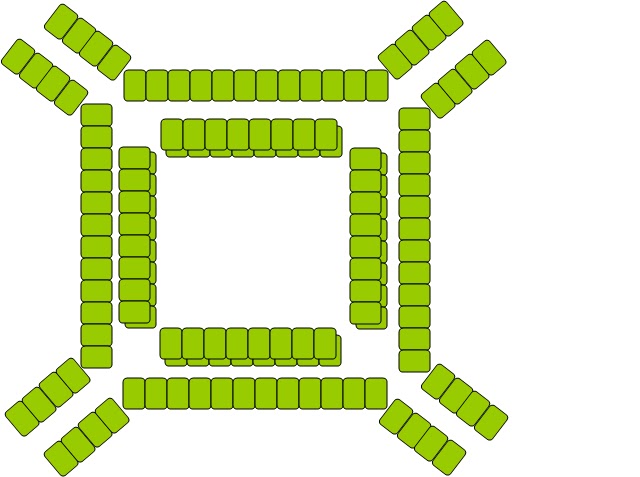
全員で協力して,すべての牌を伏せてよく混ぜ,1人あたり,17枚2段の伏せられた牌の山を作ります.テーブルの上に布を置いて遊ぶことが多いので,手元で作った牌の山を押し出さないで,はじめから山を作る位置に下の段の牌を並べ,その上に上の段の牌を少しずつ載せてかまいません.

最初の親は,東の席の人がサイコロ2つを振って決めるか,全員でサイコロを振って,一番大きな目を出した人にします.あとは,前の手で上がった人が親です.前の手が流局だったときは,親を変えません.親を続けて務めること,普通の麻雀用語の連荘(レンチャン)を,杭州では“牢荘”(ラオツヮン)といいます.“老荘”と書くこともあります.他の人から変わったばかり,あるいはゲームの最初の親は“1牢”,2手続けての親は“2牢”,3手続けての親は“3牢”といいます.

配牌

親は,サイコロ2つを牌の山に囲まれた中で振ります.2つの目の合計の席の人は,自分の目の前の山を,右端を1として,右から左に,2つの目の合計まで数え,その列と次の列の間を少し空けます.牌の山は,他のゲームの進行とは逆に,この切れ目から時計回りに使います.切れ目の時計回り側が山の先頭,反時計回り側が末尾です.先頭から1枚ずつ牌を取るときは,上,下,次の列の上の順番で取ります.末尾から牌を取るときは,杭州では,他所と異なり,下,(下が先に取られて下になった)上,次の列の下の順番に取ります.親から順番に,反時計回りに,牌の山を,先頭から2列4枚ずつ取ります.これを3周行って,1人12枚を牌を手にしたら,親は,牌の山の先頭の上の段の1列目と3列目の2枚を取り,手の枚数を14枚にします.親の右隣の人は,1列目の下の段,親の向かいは2列目の上の段,親の左隣は,2列目の下の段を取ります.これで,子3人は,それぞれ13枚の牌を手にします.

財神

財神(ざいじん,ざいしん,ツァイシェン,杭州話だとゼーゼン)は,上がりの手の中に限り,何の牌にも化けられる万能牌です.配牌を終えたら,配牌で山を分けた人の右隣りの人の山の末尾を1として,先頭に向かって,配牌のとき親が出した2つの目の合計まで数え,その列の上段の牌を表に返します.この牌は,財神表示で,その下段にある牌ともどもゲームには使いません.財神表示と同じ牌3枚が財神になります.白は,白ではなく,財神表示と同じ牌として扱います.例えば,財神表示が3索なら,残りの3枚の3索が財神で,白は3索になります.

手の進行

全員が牌を取り終えたら,横一列に並べた牌を,自分だけが見えるように起こします.
誰かが上がるか流局するまで,親から始めて,反時計回りに,順番に,上がりを目指して,以下を繰り返します.
牌を1枚余分に手にしている親の最初の番を除いて,牌の山の先頭から牌を1枚手に入れます.上がっていなければ,あるいは,上がりたくなければ,手の牌から,不要な牌を1枚捨てます.捨て牌は,自分の前,牌の山の内側に,捨てた順に並べて置きます.参考までに,中国各地には,香港映画で見かけるように,中央に乱雑に置くルールが多く,杭州のようにきれいに並べるのは,少数派だと思います.

上がり型

上がるには,手の牌とさらした牌に山から引いた牌か捨て牌1枚を合わせて,対子1つ(頭という)と4つの面子,あるいは7組の対子を作ります.
対子は同じ牌2枚です.面子は,順子か刻子か槓子です.順子は,3萬4萬5萬のように,同じ種類で数が続いた牌3枚です.1と9はつながらないので,8索9索1索は順子になりません.刻子は,7筒7筒7筒,中中中のような同じ牌3枚です.槓子はカンしてさらした同じ牌4枚です.同じ牌が4枚あっても,カンしなければ槓子になりません.

チー・ポン・カン

チー.手の中の牌2枚と,上家(左隣の人)が捨てた牌が順子になるとき,“チー”(杭州話では“チョッ”)と発声すると,山から牌を引く代わりに,捨て牌と2枚の手牌で順子を作れます.チーした人は,不要な牌を1枚捨て,手の中の2枚の牌を手牌から少し離れた左側に表向きにさらし,捨て牌を横向きにして2枚の左側に置きます.牌を横向きにおくのは,最後に説明する包(パオ)の規則のためです.次の順番は,チーした人の下家(右隣の人)になります.手から財神を出してチーはできません.捨てられた財神はチーできません.なお,白は財神表示の代わりで,特別な万能牌ではないので,白を財神表示の代わりにしてのチーはできます.
ポン.手の中の牌2枚と,他の3人の誰かが捨てた牌が刻子になるとき,“ポン”(杭州話も同じ)と発声すると,間の順番の人を飛ばして,山から牌を引く代わりに,捨て牌と2枚の手牌で刻子を作れます.ポンした人は,不要な牌を1枚捨て,手の中の2枚の牌をチーと同じようにさらし,右隣か左隣からポンしたときは捨て牌を横向きにし,2枚のそれぞれ右端,左端に置きます.対面(向かい)からポンしたときは1枚も横にしないで3枚を並べてさらします.次の順番は,ポンした人の下家(右隣の人)になります.チーとポンが同時に言われたときは,ポンが優先で,チーはできません.手から財神を出してポンはできません.捨てられた財神はポンできません.なお,白はポンできます.
カン.3通りの方法があります.(1)暗槓.自分の番に手の中に同じ牌が4枚あるとき,“カン”(杭州話も同じ)と発声し,4枚を伏せてさらし(手が終わったら見せる),山の末尾から牌を1枚補充し,不要牌を1枚捨てます.(2)補槓.自分の番に,自分がポンしている牌を山から引いたとき,あるいは,すでに手の内にあるとき,“カン”と発声し,この1枚をポンしている牌に付け加えてさらし,山の末尾から牌を1枚補充し,不要牌を1枚捨てます.(3)直槓.手の中に同じ牌が3枚あり,他の3人の誰かがもう1枚を捨てたとき,“カン”と発声すると,間の人の順番を飛ばして,捨て牌と3枚の手牌で槓子を作れます.4枚をポン同様に捨て牌をもらった人がわかるようにさらし,山の末尾から牌を1枚補充し,不要牌を1枚捨てます.チーとカンが同時に言われたときは,カンが優先で,チーはできません.財神が入ったカンはできません.どのカンでも,次の順番は,カンした人の下家(右隣の人)です.また,杭州ルールでは,カンの補充牌を取るとき,山の末尾の上ではなく下の牌を先にとります.
ポンできる牌を見逃したら,自分の順番が来るまで,見逃した牌はポンできないとする人がいます.ポンやカンで順番が飛ばされた場合,順番が来たものとみなします.

上がり

順番で,あるいはカンの補充で山から引いた牌で上がれる場合,この牌を手に入れないで卓上に置き,上がりを意味する発声(杭州話では“hu”)とともに手を公開して上がれます.これをツモ(自摸)上がりといいます.3牢(3連荘)以上の場合に限り,親なら子,子なら親の捨て牌か拉槓(ラーカン)でも上がれます.捨て牌での上がりを振込み上がりといい,振り込むことを放銃(中国語だと放冲,点炮)といいます.拉槓は,チャンカンのことで,捨てられたら上がれる牌を,他の人が,ポンした牌に付け加えるカンしたときです.
まとめると,1牢と2牢では,ツモでしか上がれません.3牢以上ならツモの他に,振込みと拉槓でも上がれますが,振込みと拉槓は,親子間でしか認められず,子どうしの振込みと拉槓はできません.
上がりのとき,上がった人だけでなく,全員が手を公開します.
捨てられた財神では上がれません.振込み上がりは,チー,ポン,カンより優先されます.親の捨て牌で2人以上の子が上がりを宣言したら,親に順番の近い子が優先され,他の子の上がりは認められません.
上がれる牌を見逃したら,自分の順番が来るまで,見逃した牌では上がれないとする人がいます.ポンやカンで順番が飛ばされた場合,順番が来たものとみなします.
財飄でないのに財神を捨てたら上がり放棄とする人がいます.これを認める場合も,白は,財神表示と同じ牌扱いなので,捨てても上がり牌の見逃し以外の制限を受けません.
上がったら,その手は終わりです.上がり方に応じた点数を受け渡し,次の手をはじめます.

流局

牌の山は,必ず財神表示とその下の牌を含めた10列20枚を使わないで残します.それまでに誰も上がらなければ流局です.流局したら,点数の受け渡しはなしに,次の手をはじめます.

点数

ツモ上がりは,他の3人が1点ずつを,振込み上がりは,振り込んだ人が1点を上がった人に払います.受け取りか支払いが親の場合,1牢なら2倍,2牢なら4倍,3牢以上なら8倍にします.したがって,
  • 1牢.親のツモなら,子3人が2点ずつ.子のツモなら,親は2点,子2人は1点ずつ.
  • 2牢.親のツモなら,子3人が4点ずつ.子のツモなら,親は4点,子2人は1点ずつ.
  • 3牢以上.親のツモなら,子3人が8点ずつ.子のツモなら,親は8点,子2人は1点ずつ.親から子,子から親への振込みでは,振り込んだ人が上がった人に8点.

次の上がり方では,この点に所定の倍がつきます.

  • 爆頭(パオトウ,杭州話だとバオドー,ドーの母音はOウムラウトの音).2倍.暴頭とも書く.敲響(チャオシャン)とも言う.財神の単騎待ち(1枚で頭・対子になるのを待つこと)です.何でも上がれる形ですが,この場合に限り,3牢以上でもツモ上がりしかできません.なお,この形に構えるときの捨て牌と財神で頭(か対子)が完成しているので,爆頭などを狙うには,必ず上がりを崩す必要があります.逆にいうと,財神ありの手でツモ上がる前に,爆頭などを狙えないか考える必要があります.
  • 財飄(ツァイピャオ,杭ゼーピャオ).1回に付き2倍,必ず爆頭の2倍も付くので,財飄で4倍と考えてもよい.財神を捨てて次のツモで爆頭で上がります.ツモ上がりの前にカンかもう1周の財飄をはさめます.財神が捨てられたら,他の3人は,1周の間,チー・ポン・明槓・振込み上がりはできません.暗槓とツモ上がりはできます.財飄中の人に,つぎのツモを待つだけでなく,チー・ポン・明槓を認める人がいます.チー・ポンが許されるのは,手の中で財神で代替していた牌をチー・ポンで浮かせられる場合だけで,浮いた財神を捨てて,もう1周財飄を続けます.
  • 双飄(シュアンピャオ,杭スヮンピャオ).財飄2回と爆頭で8倍.両飄ともいう.財飄中に,ツモかカンの補充で財神を浮かせるか得て,それを捨ててもう1周財飄を回して上がります.財飄と財飄の間にカンがあっても,双飄です.財飄中のチー・ポンを認めるなら,チー・ポンで浮かせた財神を捨てても双飄です.
  • 槓開(カンカイ,杭カンケー).1回につき2倍.カンの補充牌での上がりです.常にツモ上がりとして扱います.カンが連続したら,連続した回数2倍します.カンとカンの間に財飄があっても,カンが連続しているとみなします.何でも上がれる爆頭・財飄との組み合わせでできることが多いので,次のような略称があります.
    • 槓爆(カンパオ,杭カンバオ).槓開+爆頭
    • 槓飄(カンピャオ).槓開+財飄
    • 飄槓(ピャオカン).財飄+槓開
  • 七対(チートゥイ,杭チェットゥイ).2倍.対子7組での上がりです.財神がないときは清七対といい,さらに2倍して4倍になります.3牢の振り込み上がりでは清七対の追加の2倍を認めない人も多いです.
  • 豪華(ハオホァ,杭ガウワー).1組につき2倍.同じ牌4枚で対子2組を作った七対です.カンしてはなりません.4枚に財神を入れられません.
  • 拉槓(ラーカン).2倍.ポンした牌へのカンが待ち牌の場合です.振込み上がりの一種なので,3牢以上で,親子間でないとできません.2牢で認める人もいます.爆頭では拉槓できません.点数はツモ上がりと同じですが,拉槓された人が包のように1人で払います.

一番高い手は,三牢四槓両飄の1024点です.三連荘以上でカン4回と財飄2回を続けての上がりなので,理論的な可能性に過ぎません.

三攤(タン,杭テー)の包.同じ手の間に,AがBに3回以上チー・ポンされたら,AとBの間には,その手が終わるまで,包の関係ができます.さらし方で誰からチー・ポン・カンしたか分かるので,置き方が同じ組が3組あると,その人と3組の牌が指す席の人の間に包が成立するとひと目で分かります.Bがツモで上がったら,Bへのすべての支払いをAが肩代わりして払います(承包).Aがツモで上がったら,Aへのすべての支払いを2倍にしてBが肩代わりして払います(反承包).上がった人に複数の包の関係があるときは,すべての包の相手から,承包か反承包の点を丸ごともらえます.例えば,AとBが互いに3回以上チー・ポンしているときは,A,Bともに,相手から,承包と反承包の両方の点をもらえるので,手に入る点数が3倍になります.

罰則

大相公,小相公.捨て忘れやカンのミスで手牌が多すぎ(大相公),少なすぎ(小相公)の人は,その手が終わるまで上がり放棄です.
チョンボ.上がれない手で上がったら,上がろうとした虚偽の上がりの点数を全員に払います.その手が終わるまで上がり放棄にして,手を続ける人もいます.

バリエーション

三攤の包に関する食いの制限.三攤の包は親子間だけでしか成立してはならない,つまり子同士で包が成立するような食いをしてはならないという人がいます.チー3回はダメだがポンが混ざるならよく,その場合は子の間の包も成立するという人がいます.2牢まではよく,3牢のときだけどちらかの制限をかける人もいます.2牢以上で制限する人もいます.包の規則の混乱を防ぐため,いつでも親子を問わず誰も同じ人から3つ以上泣いてはいけないとする人もいます.

振り込みのときの包.3牢の振り込みのとき,ツモ上がりと同じように三攤の包を適用し,振り込んだ人だけでなく承包(反承包)の人も上がった人に支払うとする人がいます(同じプレイヤーなら支払いが2倍か3倍になる).

財飄後半場の包.財飄の周に財飄している人にチー・ポン・カンされた人は,チー・ポン・カン以後の分の点を1人で肩代わりして払うとする人がいます.この場合,チー・ポン・カンより前の分の点は,3人で払います.

白板財神.自動卓を使う場合に,財神表示をめくらないで白を固定財神にする人がいます.これは財神をわかりやすくするためではなく,高い手のもとである財神を4枚に増やす目的で行われます.

ツモのみ.主に財神を増やすのに併せて,3牢でもツモでしか上がれないとする人がいます.

十風.手の始めから10枚連続で字牌を捨てるとツモ,11枚なら爆頭相当の上がりにする人がいます.10枚で爆頭という人もいる,食われたらどうするか,財飄したらどうなるかは定説がありません.生のゲームで見たことがないという人がおり,オンラインゲーム専用のルールかもしれません.

いきなり3牢.サイコロの目がゾロ目や一定の数以上のとき,3牢にする人がいます.オンラインゲームのオプションです.

2018年9月20日木曜日

Xiamen (Amoy) mahjong rules

It features unique wall layout and rituals for that, as well as somewhat unusual scoring system based on multiples instead of doubles. Although points for sets and flowers may appear slightly complicated, they add varieties to outcome of the game that would be somewhat monotonous otherwise.

(9 November 2018)Added irregularities section and some more variations.
(10 October 2018)Added Quanzhou scoring and a couple of variations.

Equipments

144 tiles of three suits (characters, circles, bamboos), honors (four winds and three dragons) and the eight flower tiles (four seasons and four flowers).
Two dice.

Seating

One of the players, e.g. the youngest, picks four tiles of east, south, west and north, one tile for each direction, places them face down and shuffles them well.
Another player, e.g. the eldest, throws the two dice, counts himself/herself as one, the player to his/her right as two, and so on counter-clockwise, and who is sitting in the seat of the sum of the two dice draws a tile he/she likes, followed by each player counter-clockwise. Who picks east remains seated, or moves to the seat choosen as east by any appropriate means. The south player moves to the right of the east, west opposite, and north left.

Building walls

The four players turn all the tiles face down and shuffle them together. Each player arranges four horizontal rows of eight tiles in front of him/her, with all tiles facing down and neighbouring rows touching each other. Then he/she adds two tiles to each end of the third row from the center of the table to make it twelve tile wide, pushes it forward together with the first and second rows, and puts the second row on top of the first. Finally he/she breaks the last remaining row in two halves, holds each set of four tiles in each hand, and places them at each end of the twelve tile row with leftmost and rightmost ends slanted toward him/herself. There are no distinction between the wing parts and the middle parts of the outer walls. They are arranged in this way so that they can fit comfortably in a mahjong table.


Deal

The banker throws two dice to choose who takes the tiles first. Rolls of the dice are counted from who throws them as one, whose right side neighbour as two, and so on counterclockwise until the sum of the pips are reached. The player chosen by the roll takes first two stacked pairs of each wall, his/her right neighbour the third and fourth, his/her opposite the fifth and sixth, and his/her left neighbour the last two, counting clockwise unlike everything else in the game, which is counterclockwise.

Breaking (outer) wall

The player who took the first two stacks from the wall throws the dice to choose who breaks the outer wall. The player chosen by the roll count tiles of his/her outer wall from the right end (including the wing) as one and clockwise until the sum of the pips, and move the wall slightly so that there is a gap between the last counted tile and the next one. The gap marks the head and the tail of the wall. The banker takes the first tile from the head of the wall to have 17 tiles. Then each player turns his/her tiles up for him/her to see and no one else. Because a player starts with no less than 16 tiles, it is a common practice to arrange them in two rows, front and rear.

Melding flower tiles

The players lay all flower/season tiles in their hands down, in front of him/her or right hand side. Then each player draws same number of tiles from the tail of the wall, starting from the banker and counterclockwise. If a player draws a season or flower tile, he/she lays it down immediately and wait until his/her next turn to draw a supplement tile. This continues until no one has season and flower tiles in his/her hand.

Choosing Gold tile

After melding flowers and drawing supplement tiles, the player who broke the wall throws two dice, counts tiles from the current tail of the wall counter-clockwise, and turns the tile at the sum of the pips face up. This is the Gold indicator, the other three identical tiles are Gold tiles and White Dragons the face value of the Gold indicator. For example, if the indicator is 8 Circles, the other three 8 Circles are Gold and White Dragons 8 Circles. A Gold tile can be substituted for any tiles but seasons and flowers. If a season or flower is turned up as the indicator, it is turned back and the player who broke the wall rolls the dice again.

Winning hand

A winning hand is one pair and five sets. A pair is two identical tiles. A set is a run, a pung or a kong. A run is three tiles of a suit in numerical order, for example, 2 Bams, 3 Bams and 4 Bams. A pung is three identical tiles. A kong is four identical tiles declared and melded. A set of four identical tiles is not a kong without a kong call and melding.

Play of the hand

Starting from the banker and counter-clockwise, each player performs these actions in turn:
(drawing) Except in the first turn of the banker who has one extra tile in his/her hand, the current player draws a tile from the head of the wall; if he/she draws a flower tile, he/she melds it and draw a supplementary tile from the tail of the wall;
(discarding) Unless he/she has a winning hand and wants to win, he/she discards one tile that has not been melded from his hand.

Following discarded honors

If a player has a singleton honor and a tile identical to it has already been discarded in current hand, he/she must discard it before other honors and suit tiles. If there are more than one such honors, he/she can freely choose a tile to be discarded from them.

Chow

If two tiles in player's hand and a tile just discarded by his/her left side neighbour would be a run when put together, he/she can make a run from these tiles by saying 'chow', discarding a tile, laying down the two tiles face up to the left of his/her hand, and adding the discarded tile to them. A chow'ed run cannot contain a Gold tile. No tiles can be added or taken from a chow'ed run. After a chow, turn moves to the right side neighbour of the player who has done the chow.

Pung

If a player has two identical tiles in his/her hand and the same tile is just discarded by any other player, he/she can make a pung by saying 'pung', discarding a tile, laying down the two tiles face up to the left of his/her hand, and adding the discarded tile to them. A pung'ed set cannot contain Gold tiles. No tiles can be taken away from a pung'ed set. After a pung, turn moves to the right side neighbour of the player who has done the pung.

Kong

If a player has four identical tiles in his/her hand and it is his/her turn, he/she can make a kong by saying 'kong' and laying down the four tiles to the left of his/her hand. If a player has a tile identical to those of his/her layed down pung and it is his/her turn, he/she can make a kong by saying 'kong' and adding the tile to the pung. If a player has three identical tiles in his/her hand and the same tile is just discarded by any other player, he/she can make a kong by saying 'kong', laying down the three tiles face up and adding the discarded tile to them. In all of its three variations, the player who does kong draws a supplementary tile from the tail of the wall and discards a tile. After a kong, turn moves to the right side neighbour of the player who has done the kong.

Win

If tiles in a hand of a player and laid down for chow, pung or kong form a winning hand together with another tile, the player can declare win. A hand ends when a player wins. The winning tile is a tile drawn from the wall, either from its head or tail, just discarded by other player, or a tile to be added to a pung in an (failed) attempt at a kong. The last way is called robbing a kong. One cannot win by a discarded Gold tile. There is only one winner in a hand. If more than one players declare win by a same discarded tile, one whose turn is closest to the player discarding the winning tile wins. Some play that a player who has a gold tile in his/her hand can only win by a wall tile.

Dead wall and draw

16 tiles in the wall are always left unused. If nobody wins when there are only 16 tiles are left in the wall, the hand ends in a draw.

Scoring

The winner receives score of his/her hand from each of the other players. Score of a winning hand is (base + flowers) x multiplier. The base is 2 in case of payment between the banker and a non-banker, and 1 between non-bankers. The banker's base is doubled each hand he/she stays and reset to 2 when the banker changes.

Flowers (it's "water" in Xiamen but water is uncountable in English...) are number of flower and gold tiles (discarded gold tiles do not count) as well as these scores for each set in winner's hand:
  • honor: open pung 1, closed pung 2, open kong 3, closed kong 4
  • suits: open pung 0, closed pung 1, open kong 2, closed kong 3
"Open" here means a set containing discarded tile, and "close" those made solely of tiles drawn from the wall.
A set of four seasons or flowers is worth 8 flowers instead of 4.

Multipliers are:
  • Common Win: x1. A win where none of the below apply. A win by a discarded tile.
  • Win by a wall tile or robbing a kong: x2.
  • Three gold knocker: x3. This is an exception to the winning hand rules, in that it only requires three gold tiles and the rest does not have to form sets or a pair, but it is only allowed just after a deal or last turn before a draw. If a player have them after deal and melding of flowers, it becomes x4 instead of x3.
  • Gold float: x4. When a player has five sets completed and waiting for an eye with a Gold tile. He/she can win with any tiles this way, but, in this particular case, he/she can only do so with a tile from the wall.
  • Robbing a gold: x4. The other exception to the winning hand rules. It is when a player can win by claiming the gold indicator right after a deal and melding of flowers, and in case of the banker, first discarding. When more than one player can rob a gold, non-banker wins the banker.
  • Heavenly and earthly win: x4. Heavenly win is when the banker has a winning hand right after deal and melding of flower tiles. Earthly win is when a non-banker wins by the banker's first discard in a deal. 
  • Double float: x8. When a player discards a gold tile and win by Gold float in his/her next turn. During a float round, the floating player cannot win by claiming a discarded tile and the other players cannot claim discarded tiles for chow, pung, or kong. Some allow non-floating player to win by a discarded tile during a float round, while others forbid that.
  • Triple float: x12. When a player attempts double float, draws a tile he/she substitutes a gold tile for or a gold tile itself, and discards the float tile again to do another round of float to win by gold float.

Irregularities

Long or short hand. A player who has too many or too few tiles in his/her hand,  e.g. 11, 12, 15 etc, cannot win in that hand.

Wrong chow, pung, kong or drawing. A player who did a wrong chow, pung, kong or drawing cannot win in that hand.

False win. A player who declares a false win has to pay each player the amount he/she could have received from him/her if it were a valid win.

Variations

Quanzhou (泉州) scoring. They use slightly different scoring in Quanzhou:
  • The base of banker is increased by one when he/stays. Some increase it by one times multiplier of banker’s win instead.
  • An open kong made from an open pung has the same number of flowers as a closed pung.
  • Some count the same number of flowers in an open pung as a closed pung.
  • There are no bonus flowers for set of four flower/season tiles.
  • The multipliers are 1x for Common win, 2x for Win by a wall tile or Robbing a kong, 3x for Gold float, 6x for Double float, 9x for Triple float, 3x for Three gold knocker. Robbing a gold and Heavenly win are not recognised. When a player collects all the eight flower and season tiles, he/she wins immediately regardless of his/her hand with 3x multiplier.

Restriction on common win. Many play that a player who has gold tile in hand cannot win by claiming a discarded tile.

Missed win or pung. Some play that a player who missed a win or a pung (including an open kong) has to wait until his/her turn to come or pass before winning by claiming or doing a pung on the same tile.

Required float. Some play that a player who has three gold tiles has to win by three gold knocker, gold float or better.

False float. Some play that discarding a gold tile and not floating is an offense and who does so forfeits his/her right to win in that hand.

Inflated bases. Some multiply the bases by 5 (10 for banker, 5 for non-bankers), 8 (16 for banker, 8 for non-bankers) and so on, to reduce influence of flower counts over payouts.

2016年3月6日日曜日

Beijing mahjong rules

Despite being a variant of the national capital, it is rather idiosyncratic just like many regional rules and virtually unknown in the rest of the country. It is unusual to have bias against pung and chow, not that extreme like Japanese "Reach" which has accumulating penalties, though.

Equipments

136 tiles of three suits (characters, circles, bamboos) and honors (four winds and three dragons). The eight flower tiles (four seasons and four flowers) are not used.
Two dice.

Prior agreements

The players agree on what patterns to be recoginsed, how much doubles certain patterns worth, what optional rules to use, and how much a point is worth. A common arrangements include 1, 2, 4 (a point is 1 RMB) and 2, 4, 8 (2 RMB per point).

Seating

It is taken seriously as a very influential element of players' luck and therefore done in a formal fashion. Its details may differ from one group to another.
One of the players, e.g. the youngest, picks four tiles of east, south, west and north, one tile for each direction, places them face down and shuffles them well.
Another player, e.g. the eldest, throws the two dice, counts himself/herself as one, the player to his/her right as two, and so on counter-clockwise, and who is sitting in the seat of the sum of the two dice draws a tile he/she likes, followed by each player counter-clockwise. Alternatively, the shuffled tile are placed face down in a row, flanked by an odd-numbered and an even numbered tile at each end to determine from which end the tiles are taken. Yet another way is to take a tile at will after the shuffling without throwing the dice. Who picks east remains seated, or moves to the seat chosen as east by any appropriate means. The south player moves to the right of the east, west opposite, and north left.

Building walls

All the tiles are turned face down and shuffled well by the four players. Each player builds a wall of 17 tile wide and two tile high with all tiles facing down. The four walls are placed around the center of the table to form a rectangle, or the right ends are pushed forward to make the shape slightly rotated counter-clockwise.

Banker (庄家)

The first banker is the east player. The banker stays when he/she wins or when a hand ends in a draw, and moves to the right side neighbour of the banker when a non-banker wins. A game is four banker rotations.

Breaking a wall

The banker throws two dice and the player in the position of the sum counts the same (the sum) number of stacked pairs from the right end of his/her wall to left and breaks open a gap between the last counted pair and next one. The wall is used clockwise from the gap unlike everything else in the game, that is counter-clockwise. The top tile of the head pair is used before the bottom one, followed by the next pair. Tiles drawn after kong are taken from the tail of the wall.

Deal

Starting from the banker and counter-clockwise, each player takes four tiles at once from the head of the wall in turn, repeated three times to have twelve tiles in hand. The tiles are arranged in a row and placed face down. Then the banker takes first and fifth tile, i.e. top tiles of the first and third pairs from the head of the wall, and each of the remaining three players takes one tile in turn.

Wild tiles (混儿)

After the banker has 14 tiles and the other players 13, the banker takes the first tile from the head of the wall, and places it face up on the wall near its tail for everyone to see. The face up tile is the wild indicator and the four tiles of the same suit and one greater in number are the wild tiles. If it is a nine, one's of the same suit are wild; if it is a wind, next in the order of East-South-West-North are wild, if it is a dragon, next in the order of Red-Green-White. A wild tile can be substituted for any tile in a winning hand. A player cannot make an open set or a kong containing one or more wild tiles. A player cannot discard a wild tile, or he/she forfeits the right to win in that hand.  A player cannot win by claiming a discarded wild tile, either, but he/she can complete a set or a pair of eyes containing a wild tile to win.

After the deal and the selection of wild tiles, the players turn his/her tiles up for him/her to see and no one else.

Play of tiles

Starting from the banker and counter-clockwise, the players repeat the following in turn until one of the players wins or the hand ends in a draw.
  • Unless it is the first turn of the banker who already has one extra tile in his/her hand, the current player draws the first tile of the wall from its head.
  • If the player cannot win or does not want to do so, he/she discards a tile in front of him/her. Discarded tiles are placed haphazardly in the center of the table so that one has to remember who discarded what.

Winning hand

A winning hand is either
  • an eye and four sets, or
  • seven pairs.
An eye or a pair is two identical tiles. A set is a run, a pung or a kong. A run is three tiles of a suit in numerical order. A pung is three identical tiles. A kong is four identical tiles melded with a kong call.
A player can substitute wild tiles for any tiles in a winning hand so long as they are not part of open sets or kong.

Chow (吃)

If two tiles in player's hand and a tile just discarded by his/her left side neighbour would be a run when put together, he/she can make an open (or exposed, as opposed to closed or concealed) run from these tiles by saying 'chow', discarding a tile, laying down the two tiles face up to the left of his/her hand together with the claimed tile. A player cannot add or remove tiles to or from open runs. An open run cannot contain fortune tiles. After a chow, turn moves to the right side neighbour of who has done the chow.

Pung (碰)

If a player has two identical tiles in his/her hand and the same tile is just discarded by any other player, he/she can make an open pung by saying 'pung', discarding a tile, laying down the two tiles face up to the left of his/her hand together with the claimed tile. A player cannot remove tiles from open pung. An open pung cannot contain fortune tiles.
If two players say pung and chow simultaneously, the pung wins over the chow. After a pung, turn moves to the right side neighbour of who has done the pung.

Kong (杠)

A kong requires a 'kong' declaration, melding and drawing a supplementary tile. A set of four identical tiles is not a kong without these actions. There are three different ways to do a kong.
a) closed kong. If a player has four identical tiles in his/her hand and it is his/her turn, he/she can make a kong by saying 'kong' and laying down three of the four tiles face down and one of them face up to the left of his/her hand.
b) filling (open) kong. If a player has a tile identical to those of his/her open pung and it is his/her turn, he/she can make a kong by saying 'kong' and adding the tile to the pung.
c) direct (open) kong. If a player has three identical tiles in his/her hand and the same tile is just discarded by any other player, he/she can make a kong by saying 'kong', laying down the three tiles face up together with the discarded tile.
After laying down the tiles, the player who is doing a kong draws a supplementary tile from the tail of the wall and discards a tile. A player cannot add or remove tiles to or from a kong, open or closed. A kong cannot contain fortune tiles. If two players say kong and chow simultaneously, the kong wins over the chow. After a kong, turn moves to the right side neighbour of who has done the kong.

Win (胡牌)

If tiles in a hand of a player and those laid down for chow, pung or kong form a winning hand together with another tile, the player can declare win by saying 'hu' (胡), or whatever all the players can understand as such, and revealing his/her hand. A hand ends when a player wins.

There are three ways to win:
  • an own tile (提溜): a tile to complete the hand is drawn from the wall either from its head or tail, which is not brought into his/her hand but placed beside face up on the table;
  • claiming a discarded tile (点炮): a tile to complete the hand has just been discarded by other player; or
  • robbing a kong (抢杠): a tile to complete the hand is about to be added to an open pung in a (failed) attempt at a kong. The exception is one of three sets of flush, which can be completed by robbing a closed kong as well.

A player can always win by his/her own tile.
A player can win by claiming a discarded tile or robbing a kong only when he/she does not have open sets or more than two wild tiles.
A player can only win by his/her own tile when he/she has four sets or six pairs completed and calls for a pair of eyes with a wild tile.
Some play that a player who has missed a winning tile cannot win by claiming a discarded tile until his/her turn comes or is passed by a pung or a kong.

A player who discards a wild tile forfeits his/her right to win in that hand.
A player cannot win by claiming a discarded wild tile.
A player can win by completing a run or a pung containing a wild tile with a discarded tile or a robbed kong.

A win takes precedence over kong, pung or chow calls.

Draw

A certain number of stacks of tiles remain unused in a hand. It has to be agreed upon before starting. Common arrangements include:
  • 7 stacks,
  • 7 stacks when number of kong is 0 or 1, 8 stacks otherwise, or
  • 14 tiles when there are no kong, increasing by one at each kong.
The wild indicator is not used in any hands but not counted as part of these tiles.
When there are only that amount of tiles remaining in the wall and no one has won, the hand ends in a draw.

Scoring

Each non-winner pays the winner a unit with all applicable doubles applied. The doubles are:
  • Banker (庄家): When the banker wins, or when the banker pays.
  • Closed (门清): When the winner does not have open sets. He/she still can win by claiming the fourth sets and scores a double for a closed hand.
  • Own tile (提溜): When the winner wins by a tile drawn from the wall, either from its head or tail; or when the paying player discarded the winning tile.
  • Straight (没混,无混): When the winning hand does not have any wild tiles, or all of them are used at their face value.
  • Flush (龙): When the winning hand has three runs 123, 456 and 789 of a suit.
  • Seven Pairs (七对): When the winning hand is seven pairs.
  • Deluxe (豪华): When two pairs in seven pairs are four identical tiles, none of which are wild tiles, and not a kong. A double is awarded for each of such sets. A wild tile cannot be substituted for one of four tiles in Deluxe.
  • Catch Five (捉五魁,捉五): When the winning hand is a gap calling hand with 4C and 6C calling for 5C or seven pairs calling for 5C. A wild tile cannot be substituted for a 5 Character as a winning tile or an eye calling tile in Catch Five.
  • Kong Bloom (杠开,杠疵): When a hand is won be a tile drawn from the tail of the wall as part of a kong. Unlike the other doubles, the double for Kong Bloom applies to scores for kongs as well as a winning hand.

Optional doubles are:
  • Wild Eye (混悠): when the winning hand has four sets or six pairs completed and calls for a pair of eyes with a wild tile. Some treat this as a sort of Straight hand and scores a double.
  • Native Wild Flush (本混龙): when a wild tile whose face value is of the same suit as Flush tiles is substituted for one of the nine tiles of Flush. Some treat this as a sort of Straight hand and scores a double.

Rare events

The points for these events have to be agreed upon before starting a session of the game. They are usually given somewhat high scores, typically 20, but not excessively so because of their purely chance-based nature. They are not doubled for the banker, wall win, or discarding.
  • Heavenly Win (天胡): when the banker is dealt a winning hand.
  • Earthly Win (地胡): when a non-banker wins by the first discarded tile by the banker.
  • Wild Kong (混杠): when a player has four wild tiles.

Kong points

The Winner can score 1 point for each open kong and 2 for closed ones he/she made in the hand. If the winner wins by Kong Bloom, these points are doubled. Many players also double them for the banker.

Irregularities

  • False win. If a player declares a win when he/she cannot, he/she pays a) amount he/she falsely claimed to win, or b) predetermined amount usually set to the same as Heavenly Win, Earthly Win or Wild Kong.
  • Long/Short hand. If a player has too many or too few tiles in his/her hand, he/she loses the right to win in that hand but has to keep playing.
  • Discarding wild tile. A player who does so is treated just like long or short hand.

Variations

Upstairs (上楼): when a hand ends in a draw, next hand is said to be on upstairs, where all the scores are doubled. Some play an hand on upstairs too when the banker is staying three or more hands.

Void suit (断门): some require winning hand to have at least one void suit, i.e. lacking Characters, Dots or Bamboos.

Busted banker (烧庄): if each player discards the same tile without interrupted by any pung, chow or kong at the start of a hand, and the hand does not end in a draw, the banker is busted and he/she has to pay predetermined amount of points (typically 10, or a half of Heavenly/Earthly/Wild Kong) to each of the other players.

At most once: some play that a player can do pung or chow only once in a hand. There are no such restrictions on number of direct open kong even if this rule is in effect.

Additional doubles: especially in online games, all or some of Pure one suit (清一色), All pung (对对胡), Single tile hand (大钓), and Win by last tile (海底捞月) are added as double-awarding patterns. Some score additional doubles for some patterns.

Liability for discarding player (点炮包庄,大包): especially in online games, some play that a player who discarded the winning tile pays on behalf of the other two losers as well as him/herself.

2016年2月11日木曜日

陝西の麻雀

深圳と同じぐらいシンプルなルールに,偶然頼りの「馬」ではなく,「炮子(パオツ)」という賭け点制を加えて,心理戦の要素を増したゲームです.

道具

136枚の麻雀牌,花牌は使いません.サイコロ2つ.

席決め

いろいろな方法があります.
  • 着席したままで,年長者などがサイコロ2つを振って東を決める.
  • 全員がサイコロ2つを振り,目の大きい順に東南西北に座る.東の席は東になった人の席にするか,あるいはサイコロなどで決める.
  • 東南西北各1枚計4枚を伏せて混ぜ,年長者などがサイコロ2つを振って出た目の席の人から順に反時計回りに1枚ずつ引く.東の席は前の方法と同じ.

最初の親は東の席の人,後は流局か親が上がったら連荘(親を続ける),子が上がったら,親の下家(右隣り)が次の親です.

配牌など

ひとり当たり横17枚2段の牌の山を築きます.

親がサイコロ2つを振り,目の位置の人は,親の目と自分がもう一度サイコロ2つを振って出した目の合計で牌の山を分けます(2度振り).

親は14枚,子は13枚の手牌を取ります.

進行の特記事項

手を見てから親が最初の捨て牌を捨てるまでの間に,全員が炮子(パオツ)を宣言します.炮子は最低0点,最高4点です.

上家からチー,誰からでもポン・カンできます.

カンの補充牌の取り方が独特で,牌の山の末尾が上下2枚あるとき,暗カンなら下の段,明カンなら上の段を先に使います.

捨て牌は,誰が何を捨てたか覚えておかないと分からないように,乱雑に置きます.同様の理由で,誰から何を食ったか示しません.

使わずに残す牌の枚数は,カンの回数によって大きく違います.山の残りがこの枚数になって誰も上がらなければ,流局です.
  • 1つもカンがないときと3つ以上のときは13列(26枚)
  • カンが1つのときは7列(14枚)
  • カンが2つのときは8列(16枚)

上がり

頭と4メンツがあれば,何でも上がれます.他の不規則な上がり型を認める人もいます.
振り聴,縛りなどはありません.漏胡(上がり牌を見逃したら自分の番が来るまで上がれない)のルールを求める人もいます.
同じ捨て牌で2人以上が上がりのときは,頭ハネです.

上がり手の点数

振り込み,ツモ,搶槓,槓開(カンカイ,カンの補充牌での上がり)のどの上がり方でも,上がった人に,他の3人が点を払います.点を払う人か受け取る人が親なら2点,子なら1点です.ツモ(槓開,搶槓も含む)は点を2倍にします.
また,上がった人に,上がった人の炮子と自分の炮子を足した点を払います.ツモ(槓開,搶槓を含む)のときは,この点も2倍にします.炮子の点には親子の違いはありません.

カンの点数

カンしたら,その場ですぐにカンの点を受け渡しします.この点は上がれなくても,その後で反則しても返す必要はありません.
  • 暗槓は,他の3人から2点ずつ
  • ポンに牌を足すカンは,他の3人から1点ずつ
  • 捨て牌を食ってのカンは,捨てた人から2点

2016年1月22日金曜日

Nanchang mahjong rules

Its unique feature is chow of honour tiles, instead of getting rid of them altogether as they have done in Sichuan. Because the game can have as many as seven wildcards, hands without them or not using them as wildcards are richly rewarded.

Equipments

136 tiles of three suits (characters, circles, bamboos), honors (four winds and three dragons). The eight flower tiles (four seasons and four flowers) are not used.
Two dice.

Seating

Use any agreed upon way. The following is an example -- one of the players, e.g. the youngest, picks four tiles of east, south, west and north, one tile for each direction, places them face down and shuffles them well.
Another player, e.g. the eldest, throws the two dice, counts himself/herself as one, the player to his/her right as two, and so on counter-clockwise, and who is sitting in the seat of the sum of the two dice draws a tile he/she likes, followed by each player counter-clockwise. Who picks east remains seated, or moves to the seat choosen as east by any appropriate means. The south player moves to the right of the east, west opposite, and north left.

Building walls

All the tiles are turned face down and shuffled well by the four players. Each player builds a wall of 17 tile wide and two tile high with all the tiles facing down. The four walls are placed around the center of the table to form a rectangle, or the right ends are pushed forward to make the shape slightly rotated counter-clockwise.

Banker

The first banker is chosen by roll of two dice by the east player. The banker stays if he/she wins or in a case of a draw. It moves to the right side neighbour of the current banker if a non-banker wins or the banker is sacked. A session of the game is four banker rotations.

Breaking wall

The banker throws two dice. The player in the position of the sum throw them again and counts the total of the rolls of the banker and him/herself from the right end of his/her wall, the stacked pair in the end as one, the next pair as two and so on clockwise, and breaks open a gap between the last counted pair and next one. The wall is used clockwise from the gap unlike everything else in the game, that is counter-clockwise. The top tile of the head pair is used before the bottom one, followed by the next pair. Tiles drawn after kong are taken from the tail of the wall.

Deal

Starting from the banker and counter-clockwise, each player takes four tiles at once from the head of the wall in turn, repeated three times to have twelve tiles in hand. The tiles are arranged in a row and placed face down. Then the banker takes first and fifth tile, i.e. top tiles of the first and third pairs from the head of the wall, and each of the remaining three players takes one tile in turn.

After the banker grabs fourteen tiles and the others thirteen, the players turn his/her tiles up for him/her to see and no one else.

Fine tiles

After all the players grab their tiles, the banker throws the dice again, counts the rolled number from the tail of the wall, the tail pair as one and *counter-clockwise*, and flips open the top tile of the last counted stack. The face up tile is the fine tile indicator. The other three tile of the indicator become first "fine" (精) tiles and the four tiles of the same suit and one greater in number second fine tiles. If the indicator is a 9, the second fine tiles are 1s of the same suit. If it is a Wind, next one in the order of East-South-West-North is the second ones. If it is a Dragon, next one in the order of Red-Green-White is the second fine tiles. A fine tile can be substituted for any tiles in a winning hand. There are no distinctions between the first and the second ones except for their bonus points.

Winning hand

A winning hand is

  • a pair (called "eyes") and four sets,
  • seven pairs, or
  • fourteen independent tiles.

A set is a run, a pung, or a kong. A run is three tiles of a suit in numerical order, three different wind tiles, or three different dragon tiles. Note that, unlike any other variants of the game, three different honour tiles of a kind can form runs just like suit tiles. A run of dragons is red, green, and white. A run of winds is three different directions, like East, South and North. A pung is three identical tiles. A kong is four identical tiles melded with a 'kong' call.

Play of the hand 

Starting from the banker and counter-clockwise, each player performs these actions in turn:

  • (drawing) Except in the first turn of the banker who has one extra tile in his/her hand, the current player draws a tile from the head of the wall; if he/she draws a flower tile, he/she melds it and draw a supplementary tile from the tail of the wall;
  • (discarding) Unless he/she has a winning hand and wants to win, he/she discards one tile that has not been melded from his hand.

A player can discard a fine tile. A discarded fine tile is not a wildcard any longer and only taken at its face value when it is claimed for a chow, a pung, a kong or a win.

Sacking the banker (抄庄)

When all the players discard the same tile in the first round in a hand without any chow, pung, or kong, the banker is sacked. The hand continues until a player wins or it ends in a draw, when the banker has to pay each of the other three players 5 points for being sacked.

Chow

If two tiles in player's hand and a tile just discarded by his/her left side neighbour would be a run when put together, he/she can make a run from these tiles by saying 'chow', discarding a tile, laying down the two tiles face up to the left of his/her hand, and adding the discarded tile to them. A player can chow runs of honour tiles as well as those of suits. A player can chow runs containing fine tiles as long as they are used at their face values. No tiles can be added to or taken from a chow'ed run. After a chow, turn moves to the right side neighbour of the player who has done the chow.

Pung

If a player has two identical tiles in his/her hand and the same tile is just discarded by any other player, he/she can make a pung by saying 'pung', discarding a tile, laying down the two tiles face up to the left of his/her hand, and adding the discarded tile to them. A player can do pung containing fine tiles so long as they are used at their face values. No tiles can be taken away from a pung'ed set. After a pung, turn moves to the right side neighbour of the player who has done the pung.

Kong

If a player has four identical tiles in his/her hand and it is his/her turn, he/she can make a kong by saying 'kong' and laying down the four tiles to the left of his/her hand, with three of them face down and one face up. If a player has a tile identical to those of his/her laid down pung and it is his/her turn, he/she can make a kong by saying 'kong' and adding the tile to the pung. If a player has three identical tiles in his/her hand and the same tile is just discarded by any other player, he/she can make a kong by saying 'kong', laying down the three tiles face up and adding the discarded tile to them. In all of its three variations, the player who does kong draws a supplementary tile from the tail of the wall and discards a tile. A player can do kong containing fine tiles so long as they are used at their face values. No tiles can be added to or taken from a kong'ed set. After a kong, turn moves to the right side neighbour of the player who has done the kong.
Some play that a player can draw the fine indicator as a kong supplement tile instead of skipping it.

Win

If tiles in a hand of a player and laid down for chow, pung or kong form a winning hand together with another tile, the player can declare win. A hand ends when a player wins. The winning tile is a tile drawn from the wall, either from its head or tail, just discarded by other player, or a tile to be added to a pung in a (failed) attempt at a kong. The last way is called robbing a kong. There is only one winner in a hand. If more than one players declare win by a same discarded tile, one whose turn is closest to the player discarding the winning tile wins. A player cannot win by claiming a tile before his/her turn comes if he/she missed a winning tile. A turn is regarded to have come if it is passed by a pung or a kong.

Dead wall and draw

If no players win when there are 17 stacks of the tiles left in the wall, the hand ends in a draw. Some always leave 34 tiles unused, while some leave 17 full stacks when the last pair is intact and 16 and half when the top tile of the last pair is used as a kong supplement.

Scoring

A winner receives one point from each of the other  players, with all applicable doubles applied.

  • Banker (庄家): x2. When the payment is made to or from the banker.
  • Own tile (自摸): x2. When the winner wins by a tile drawn from the wall.
  • Letting off (点炮): x2. When payment is done by who discarded the winning tile.
  • Fine call (精钓): x2 (or x4 including own tile). When the winning hand has four sets or six pairs completed, calls for a pair of eyes with a fine tile, and is won by an own tile. This type of hands call for any tile but can only be won by an own tile, unless it qualifies as a German hand. If a fine call German hand is won by claiming a discarded tile or robbing a kong, it is not doubled for fine call.
  • Kong bloom (杠开): x2 (or x4 including own tile). When the winner wins by a tile drawn from the tail of the wall as a Kong supplement. It is always an own tile win.
  • Robbing a kong (抢杠): x2. When the winner wins by robbing a kong. It is scored as if it were an own tile win, without the double for own tile.
  • All pung (大七对): x2. When the winning hand is four pung (kong) and a pair.
  • Seven pairs (小七对): x2. When the winning hand is seven pairs. No open sets allowed. There are no additional doubles for four identical tiles as two pairs, unlike well-known variants like Hanzhou or Beijing.
  • Independent tiles (十三烂): x2. When there are no identical tiles, runs or run-calling tiles in 14 winning tiles. No open sets allowed. Honour runs are not considered runs only for the purpose of this hand.
  • Seven stars (七星): x2 (or x4 including indepenent tiles). When there are seven honour tiles in an independent tile hand. A fine tile cannot be substituted for an honour unless it is used at its face value.
  • German (德国): x2+5. When there are no fine tiles in winning hand or all of them are used at their face values. The five extra points are never doubled, in other words, they are added after all doubles are applied.
  • Double German (德中德): x2 (or x4+5 including German). When the winning hand is German and the three losers do not have any fine tiles in their hands (including melded sets).

Special cases

Each of the non-winner pays the winner 20 points in these cases. The doubles for own tile, banker, etc. do not apply.

  • Heavenly win (天胡). When the banker is dealt a winning hand.
  • Earthly win (地胡). When a non-banker wins by claiming the banker's first discarded tile.


Scoring fine tiles, kongs and other bonuses

These payments are done even when a hand ends in a draw, as well as when there is a winner. A player can receive these points even when he/she is not a winner.

Kong bonus

A player receives 2 points for each closed kong from each of the other players, and 1 point for each open kong.

Fine tile bonus

A player receives 2 points for each first fine tile and 1 for each second one in his/her hand including melded sets. If the total is more than or equal to 5 points, it is called "limit breaker" (冲关) and the bonus is multiplied by (total - 3), so:
 5: 5 x 2 = 10
 6: 6 x 3 = 18
 7: 7 x 4 = 28
 8: 8 x 5 = 40
 9: 9 x 6 = 54
 10: 10 x 7 = 70

Domination (霸王)

If a player has fine tiles and the others none, it is called domination and his/her fine tile bonus is doubled.

Fine kong

If a player makes a kong of fine tiles, he/she receives 10 point bonus from each of the other players. A player still can count bonus points in each fine tile although the 10 points do not count towards limit breaker nor are they multiplied for domination or breaking the limit. There are no kong bonus for a kong of fine tiles either.

Sacked banker

A sacked banker pays 5 points to each of the other players.
Some play that the banker pays 5 points to each of the other players when a hand ends in a draw.

2016年1月16日土曜日

Mahjong rules in Yangzhou, Jiangsu -- another regional mahjong with large number of patterns

Yangzhou is where Yangzhou Fried Rice originated, it's also known as birthplace of historical beauties.

Equipments

136 tiles of three suits (characters, circles, bamboos), honors (four winds and three dragons).
Two dice.

Banker rotation and winds

Banker stays if he/she wins and it moves to his/her right side neighbour if a non-banker wins or in case of a draw. Some play that the banker stays if a hand ends in a draw.

Each player is assigned a seat wind: the banker east, his/her right side neighbour south, the player sitting across the table west and his/her left side neighbour north.
A round wind starts with east and changes to south, followed by west and lastly north when banker moves to the first banker of the game.

A session of a game is four banker rotation. Some play eight rotations.

Breaking wall

Use sum of two dice thrown by the banker to determine whose wall to break and the smallest die rather than the sum to number of stacks to leave. The banker grabs 14 tiles before starting a hand and the other players 13.

Play of tiles

  • Can chow as well as pung and kong.
  • If no one wins when there are no tiles left in the wall, the hand ends in a draw, or there's no dead wall.
  • More than one player can win on a same discarded tile.
  • A player has to wait until his/her own turn to win if he/she missed a winning tile.
  • A hand must be at certain score or higher to be eligible for winning. It is set to 7, 10, 13 or 18 points, or the points of Twin Runs or 3 points more than that.


Payout scheme

  • In case of win by own tile, each of three losers pay the winner the score of the winning hand,
  • In case of win by discarded tile, one who discarded the winning tile pays the winner twice the score of the winning hand and the other two losers nothing.

Score of a winning hand is sum of points of all applicable patterns. Points for non-minor patterns tend to become higher in newer rules, along with minimum requirement.

  • Old(?): Twin Runs = Minimum = 7, Mixed One Suit = 10
  • Common: Twin Runs = 10, Minimum = 10 or 13, Mixed One Suit = 15
  • New: Twin Runs = 15, Minimum = 18, Mixed One Suit = 20

1) Minor patterns

  • Fully Closed (门清): 1. no open sets before winning.
  • Common Win (平胡): 1. four runs. the eyes are not honors.
  • Win by Own Tile (自摸): 1.
  • Single Call (丫子,独吊): 1. can win with only one tile, like 1 and 3 calling 2, 1 and 2 calling 3, or eye calling hand.
  • Void Suit (缺一): 1. a winning hand without one suit and honors.
  • End Eyes (幺头): 1. the eyes are 1 or 9.
  • No Terminals (断幺): 1. a winning hand without 1s, 9s and honors.
  • Side-by-side (齐相): 1. two runs in two suits with the same numbers. e.g. 345C 345D
  • Tandem (连副): 1. two runs in tandem in a suit, e.g. 345B 678B.
  • High-low (老少): 1. 123 and 789 in a suit.
  • Closed Pung (子格、招): 1.
  • Open Kong (明杠): 1.
  • Closed Kong (暗杠): 2.
  • (pung of) Seat Wind (门风): 1.
  • (pung of) Round Wind (圈风): 1.
  • (pung of) Dragon (中,发,白): 1.

2) 2/3-3/4 of Mixed = 7/10/15

  • Twin Runs (一板). two identical runs. e.g. 678B 678B

3) Mixed = 10/15/20

  • Mixed One Suit (混一色)
  • All Pung (对对胡)
  • Three Runs Side-by-side (三副同). e.g. 345D 345C 345B
  • Two Tandems Side-by-side (双连双喜,双飘). e.g. 123B 456B 123C 456C
  • Two High-low Side-by-side (双飘). e.g. 123B 789B 123C 789C
  • Straight Flush (一条龙). 1 through 9 of a suit forming three runs.

4) 2--2.5 times Mixed = 20/30/50

  • Four Runs Side-by-side (四副同). e.g. 345D 345B 345C 345D
  • Double Twin Runs (双板板). e.g. 456C 456C 234D 234D

5) Pure = four times Mixed = 40/60/80

  • Pure One Suit (清一色)
  • Triplet Runs (铁板). three identical runs. e.g. 234D 234D 234D
  • Double Twins Side-by-side (双板双喜). e.g. 456C 456C 456B 456B
  • Double Twins High-low (双板双老). e.g. 123D 123D 789D 789D
  • Double Twins in Tandem (双板双连). e.g. 345B 345B 678B 678B

6) Multiples of Pure

  • All Honors (风清): pure x 4 (or pure x 2)
  • Quadruplet Runs (钢板): pure x 8 (or pure x 2). four identical runs. e.g. 123C 123C 123C 123C

7) Combination patterns with bonus points

Only applicable to the 18 point minimum (15 point twins, 20 point mixed) rules.
  • Straight Flush with Twins (板龙): 50. e.g. 123C 456C 789C 456C
  • Mixed One Suit with All Pung (混对对): 50.
  • Mixed One Suit with Straight Flush (混龙): 50.
  • Mixed One Suit with Straight Flush and Twins (混板龙): 80.
  • Pure One Suit with All Pung (清对对): 130.
  • Pure One Suit with Straight Flush (清龙): 130.
  • Pure One Suit with Straight Flush and Twins (清板龙): 160.


Exceptions to the payout scheme

A "liable" player has to pay for him/herself as well as the other two losers.
  • Who gives the third open set that is a chow to a player winning with pure one suit has to pay for the other losers as well as him/herself.
  • If a player chows tiles of the same suit three times, he/she must aim for pure one suit.

2016年1月10日日曜日

Mahjong rules in Fenghua, Zhejiang -- regional mahjong with fairly large number of patterns

Fenghua is a city near Ningbo and famous as the birthplace of Chiang Kai-shek. Its mahjong is unusual in that it has fairly large number of scoring patterns with emphasis on irregular ones like seven pairs and  independent tiles.

Equipments

144 tiles of three suits (characters, circles, bamboos), honors (four winds and three dragons) and eight flower tiles (four seasons and four flowers).
Two dice.

Seating

It is done as in any other variants of the game. Its details may differ from one group to another.

One of the players, e.g. the youngest, picks four tiles of east, south, west and north, one tile for each direction, places them face down and shuffles them well.
Another player, e.g. the eldest, throws the two dice, counts himself/herself as one, the player to his/her right as two, and so on counter-clockwise, and who is sitting in the seat of the sum of the two dice draws a tile he/she likes, followed by each player counter-clockwise. Alternatively, the shuffled tile are placed face down in a row, flanked by an odd-numbered and an even numbered tile at each end to determine from which end the tiles are taken. Yet another way is to take a tile at will after the shuffling without throwing the dice. Who picks east remains seated, or moves to the seat chosen as east by any appropriate means. The south player moves to the right of the east, west opposite, and north left.

Walls

All the tiles are turned face down and shuffled well by the four players. Each player builds a wall of 18 tile wide and two tile high with all tiles facing down. The four wall are placed around the center of table to form a rectangle, or the right ends are pushed forward to make the shape slightly rotated counter-clockwise.

Banker (庄家), seat wind and prevailing wind

The first banker is chosen by roll of two dice by the east player. The roll is counted just like when the seats are determined or any other occasions, i.e. count who throws the dice as one, his/her right side neighbour as two and so on counter-clockwise. Banker stays if he/she wins or in case of a draw. It moves to his/her right side neighbour otherwise. A game is four banker rotations.
Each player is assigned a seat wind: the banker east, his/her right side neighbour south, the player sitting across the table west and his/her left side neighbour north.
A prevailing wind starts with east and changes to south, followed by west and lastly north when banker moves to the first banker of the game.

Breaking a wall

The banker throws two dice and the player in the position of the sum counts the largest pips of stacked pairs from the right end of his/her wall and breaks open a gap between the last counted pair and next one. The wall is used clockwise from the gap unlike everything else in the game, that is counter-clockwise. The top tile of the head pair is used before the bottom one, followed by the next pair. Tiles drawn after kong are taken from the tail of the wall.

Wild tiles (百搭)

A wild tile can be substituted for anything but flower tiles in a winning hand. The player who broke the wall counts pairs in his/her wall from the tail as one and counter-clockwise, and flips the top tile counted as the smallest pips of the dice thrown by the banker to break the wall. The face up tile will not be used in the hand. It is the wild indicator and the other three identical ones wild tiles. If it is one of the four seasons, the other three seasons are wild. If it is one of the four flowers, the other three flowers are wild. A tile cannot be used as a flower tile (which means no melding) when it is wild.

Deal

Starting from the banker and counter-clockwise, each player takes four tiles at once from the head of the wall in turn, repeated three times to have twelve tiles in hand. The tiles are arranged in a row and placed face down. Then the banker takes first and fifth tile, i.e. top tiles of the first and third pairs from the head of the wall, and each of the remaining three players takes one tile in turn.

After the banker grabs fourteen tiles and the others thirteen, the players turn his/her tiles up for him/her to see and no one else.

Melding flower tiles

Starting from the banker, each player takes all flower tiles from his/her hand, lay them down face up to the left of his/her hand and draw same number of tiles from the tail of the wall. If he/she draws flower tiles again, he/she repeats this until there are no flower tiles in his/her hand.

Play of tiles

Starting from the banker and counter-clockwise, the players repeat the following in turn until one of the players wins or the hand ends in a draw.

  1. Unless it is the first turn of the banker who already has one extra tile in his/her hand, the current player draws the first tile of the wall from its head.
  2. If the player has a flower tile, he/she may meld it by laying it down face up and drawing a supplementary tile.
  3. If the player cannot win or does not want to do so, he/she discards a tile in front of him/her.


Winning hand

A winning hand must have all flower tiles melded if any and the other tiles form

  • an eye and four sets,
  • seven pairs,
  • fourteen independent tiles, or
  • all honours.

The eight flower tiles melded by the same player is also a winning hand regardless of the other tiles in his/her hand.
An eye or a pair is two identical tiles. A set is a run, a pung or a kong. A run is three tiles of a suit in numerical order. A pung is three identical tiles.
A kong is four identical tiles melded with a kong call.
A player can substitute wild tiles for any tiles but flower tiles in a winning hand so long as they are not part of open sets or kong. A player can complete a set containing a wild tile with a discarded tile when he/she wins.

Chow (吃)

If two tiles in player's hand and a tile just discarded by his/her left side neighbour would be a run when put together, he/she can make an open (or exposed, as opposed to closed or concealed) run from these tiles by saying 'chow', discarding a tile, laying down the two tiles face up to the left of his/her hand, and putting the claimed tile to their left end rotated 90 degrees for easy identification of liabilities. A player cannot add or remove tiles to or from open runs. An open run cannot contain wild tiles. After a chow, turn moves to the right side neighbour of who has done the chow.

Pung (碰)

If a player has two identical tiles in his/her hand and the same tile is just discarded by any other player, he/she can make an open pung by saying 'pung', discarding a tile, laying down the two tiles face up to the left of his/her hand, and putting the claimed tile to their left or right end rotated 90 degrees if the tile is claimed from the left or right side neighbour, respectively, or the three tiles put together without any tiles rotated when the tile comes from the player sitting across the table.
A player cannot remove tiles from open pung. An open pung cannot contain wild tiles.
If two players say pung and chow simultaneously, the pung wins over the chow. After a pung, turn moves to the right side neighbour of who has done the pung.

Kong (杠)

A kong requires a 'kong' declaration, melding and drawing a supplementary tile. A set of four identical tiles is not a kong without these actions. There are three different ways to do a kong.
a) closed kong. If a player has four identical tiles in his/her hand and it is his/her turn, he/she can make a kong by saying 'kong' and laying down the four tiles face down to the left of his/her hand.
b) filling (open) kong. If a player has a tile identical to those of his/her open pung and it is his/her turn, he/she can make a kong by saying 'kong' and adding the tile to the pung.
c) direct (open) kong. If a player has three identical tiles in his/her hand and the same tile is just discarded by any other player, he/she can make a kong by saying 'kong', laying down the three tiles face up and adding the discarded tile to them just like an open pung.
After laying down the tiles, the player who is doing a kong draws a supplementary tile from the tail of the wall and discards a tile. A player cannot add or remove tiles to or from a kong, open or closed. A kong cannot contain wild tiles. If two players say kong and chow simultaneously, the kong wins over the chow. After a kong, turn moves to the right side neighbour of who has done the kong.

Winning (胡牌)

If tiles in a hand of a player and those laid down for chow, pung or kong form a winning hand together with another tile, or if a player melds eight melded flower tiles, the player can declare win by saying 'hu' (胡), or whatever all the players can understand as such, and revealing his/her hand. A hand ends when a player wins.

There are three ways to win:

  • own tile(自摸): a tile to complete the hand is drawn from the wall either from its head or tail, which is not brought into his/her hand but placed beside face up on the table;
  • claiming a discard tile (放冲,点炮): a tile to complete the hand has just been discarded by other player; or
  • robbing a kong (拉杠): a tile to complete the hand is about to be added to an open pung in a (failed) attempt at a kong.


A player can always win by his/her own tile.
Win by claiming discard is only possible when the hand scores four or more points (before rounded up). It used to be three or more points.
If a player has four sets completed and is calling for a pair of eyes with a wild tile, he/she can win by any tile but he/she must do so with his/her own tile.
There can only be one winner in a hand; when more than one non-bankers declare win by claiming banker's discard, the one whose turn is closest to the banker is the winner.
A discarded wild tile can never be claimed for winning.
A player can win by completing a run or a pung containing a wild tile with a discarded tile or a robbed kong.
A win takes precedence over kong, pung or chow calls.

Draw

The wild tile indicator is always be left unused in any cases. The tile just before it is the bottom tile. A player can pass his/her turn to refuse it. If all the players refuse it, the hand ends in a draw. If a player chooses to draw it, he/she either wins with it or discards it without exchanging it with another tile in his/her hand. If no one wins with the bottom tile, either as an own tile or as a discarded one, the hand ends in a draw.

Scoring

If a player wins, he/she receives points from the other for players. There are no payments when a hand ends in a draw.

The winner is paid according to this payout scheme, where S is score of the winning hand:

  • in case of a win by own tile, each loser pays (S x 2); and
  • in case of a win by claiming, who discarded the winning tile pays (S x 2) and each of the other two losers (S x 1).


Score of a winning hand is sum of points of all applicable patterns, rounded up to nearest multiple of ten. Scores vary from one player group to another, and they use to be base on multiples of 30 (30, 60, 90...) instead of current practice of multiple of 50 up until 1990s.

  • Base point (坐台): 1. Always awarded when a player wins. Combined with another point for presence or absence of wild tiles, it makes the 4 point minimum for win by claiming really a requirement for 2 additional points.
  • Common win (朋胡): 1. Four runs and a pair of eyes.
  • Dragon pung (中发白碰出): 1 for each.
  • Pung of seat wind (位风): 1
  • Pung of prevailing wind (圈风): 1
  • Pung of right wind (正风): 2. When seat wind and prevailing wind coincide.
  • Single call (边,嵌,单吊): 1. If the only call is gap (i.e. 68 calling for 7), eye or end (i.e. 12 calling for 3).
  • Pair call (对倒): 1. two pairs calling for one of them to complete a pung and a pair of eyes.
  • Win by own tile (自摸): 1
  • No wild tiles (无搭): 1. A winning hand without any wild tiles.
  • One wild tile (一搭): 1. A winning hand with exactly one wild tile.
  • Two wild tiles (二搭): 2. A winning hand with exactly two wild tiles.
  • Tame wild tiles (还搭): 1. All wild tiles are used at their face value.
  • Robbing a kong (拉杠): No additional points but see the section on liabilities.
  • Win by bottom tile (海底捞月): No additional points but see the section on liabilities.
  • Indedependence (十三不搭(大大胡)): 50. No chow/pung/kong calls allowed. No pairs, runs, pung, kong or sets of two tiles calling for another to complete a run.
  • Closed seven stars (大大胡(暗七星)): 150. Independence with each one of the seven honors in hand and the tile to complete the hand is something else.
  • Open seven stars (大大胡(明七星)): 100. Independence with each one of the seven honors, one of which is claimed to complete the hand.
  • Independence without a suit (大大胡(缺色): 150. An Independence hand lacking one of the suits, calling for any tile of that suit. The 150 points for closed seven stars cannot be scored with this pattern because it is implied.
  • Wild all pung (大对对(有搭)): 50. Four pung (or kong) and a pair of eyes with one or more wild tiles.
  • Straight all pung (大对对(无搭)): 100. Four pung (or kong) and a pair of eyes without wild tiles.
  • Wild loner (大吊车(有搭)): 50. A win by completing a pair of eyes with only one wild tile in hand with four open sets. Since the hand is calling any tile, it can only be won by an own tile. 
  • Straight loner (大吊车(无搭)): 100. A loner hand without wild tiles.
  • Wild seven pairs (七对头(有搭)): 50. Seven pairs with wild tiles.
  • Straight seven pairs (七对头(无搭)): 150. Seven pairs without wild tiles.
  • Closed bomb in seven pairs (七对头(暗炸)): 100. Four identical tiles none of which are claimed. Wild tiles cannot be used for the four tiles.
  • Open bomb in seven pairs (七对头(明炸)): 50. Four identical tiles one of which is claimed for the win. Wild tiles cannot be used for the four tiles.
  • Mixed one suit (混一色): 70. A winning hand made of honors and a suit. The score is meant to be half of the Pure (150+10=160) with rounding up.
  • Pure one suit (清一色): 150. A winning hand made of a suit.
  • Heavenly win (天胡): No special points. Just celebrate a rare occasion.
  • Earthly win (地胡): No special points. Just celebrate a rare occasion.
  • Uncompleted all honors (乱老头): 400 or celebration. All the tiles but melded flowers are honors. They do not have to form a pair or sets. A player still can do open pung or kong.
  • Completed all honors (清老头): 800 or celebration. All honors with a pair of eyes and four sets.

The following patterns do not count as part of four points requirement for win by claiming.

  • Completed eight flowers (八花(搓胡)): 800 or celebration. When a player melds the eight flower tiles, keeps playing and wins by completing one of the normal winning hands.
  • Uncompleted eight flowers (八花(直胡)): 400 or celebration. When a player wins by eight melded flower tiles alone.
  • Budding direct kong  (直杠(不开花)): 50. A direct open kong not winning by its supplementary tile.
  • Blooming direct kong  (直杠(开花)): 100. A direct open kong winning by its supplementary tile.
  • Budding closed kong (暗杠(不开花)): 100. A closed kong not winning by its supplementary tile.
  • Blooming closed kong (暗杠(开花)): 150. A closed kong winning by its supplementary tile.
  • Budding risky kong (风险杠(不开花)): 100. A filling open kong not winning by its supplementary tile.
  • Blooming risky kong (风险杠(开花)): 200. A filling open kong winning by its supplementary tile.
  • Blooming flower kong (花杠杠开): 50. A win by supplementary tile of a melded flower tile.
  • Three normal wild tiles (普通三百搭): 150. When wild tiles are not flower tiles.
  • Three flower wild tiles (三花三百搭): 300. When wild tiles are flower tiles.
  • Own flower (花): 2. A melded flower tile corresponding to winner's seat wind. 1 or Spring and Plum is East, 2 or Summer and Orchid South, 3 or Autumn and Chrysanthemum West, and 4 or Winter and Bamboo North.
  • Four flowers (四花): 150. A set of four melded flower tiles of a kind (seasons or flowers).


Liability or exceptions to the payout scheme

A "liable" player has to pay for him/herself as well as the other two losers.

  • If player A discarded four tiles that are claimed for open run, pung or kong by player B, A is liable if B wins.
  • If player A discarded three tiles that are claimed for open run, pung or kong by player B and player B wins with Pure One Suit, Mixed One Suit or All Pung, A is liable.
  • Robbing a kong. Winning hand is scored as if it were an own tile win and the player whose kong was robbed is liable.
  • Claimed bottom tile. The player whose bottom tile was claimed for a win is liable.