ラベル mahjong の投稿を表示しています。 すべての投稿を表示

2018年10月5日金曜日

New Three-Player Mahjong of Northwestern Hubei

It is a young regional variant, called 卡五星 or 卡五心, meaning gap call of a 5, created in late 2000’s and spread rapidly to the northwestern quadrant of the Hubei province. It combines simple classical gameplay with speed of three player variations.

Preliminaries

Number of (active) players: 3. Winner of previous hand is taken over by resting player when four play.
Equipments: 84 tiles of two suits (remove one of Characters, Bams or Dots) and Red, Green and White dragons; two dice
Prior agreement: Players have to agree on how much a unit is worth, number of hands to play or duration of game, and any optional rules.

Seating

Seats are determined by any appropriate means (i.e. random). It is generally considered to deeply influence elements of luck and done in more or less formal way. It is advisable to change seats after agreed upon number of hands are played.

Deal

The tiles are turned face down and shuffled well by all the players. Each player, then, builds a wall of fourteen tile wide and two tile high in front of him/her. Who ranked first in the seating rolls two dice, count the sum of the pips starting from him/herself as one and counter-clockwise, and who sits in the position of the sum becomes the first banker. In subsequent hands, winner of previous hand is the banker, or the loser when there are two winners. The banker stays if a hand ends in a draw.

The banker rolls two dice and a wall is chosen just like the first banker. The player behind the wall counts number of stacked pairs from the right end as one and until the rolled sum clockwise, and opens a gap between the last counted pair and the next one. The wall is, unlike everything else in the game, used clockwise from the gap during a deal and a game. Kong supplement tiles are taken from the other end the gap. Either on the head or the tail, a top tile of a pair is used before a bottom one. Starting from the banker and counter-clockwise, each player grabs two stacked pairs of four tiles from the head of the walls in turn, repeated three times to have twelve tiles in hand. Then each player picks a tile in turn, and the banker takes one extra tile to finish the deal.

Each player turns his/her tiles up for him/herself to see and not anyone else, and (optionally) arranges them in suits.

Objective

The objective of the game is to win some money by winning hands and making kong’s. In order to win a hand, a player has to make
  • one pair and four sets, or
  • seven pairs
with his/her tiles in hand, pung's and kong's, and
  • a tile draw from the wall, either as his/her first action of his/her turn, or as a kong (explained later) supplement,
  • a tile just discarded by another player, or
  • robbing a tile from a kong.
A pair is two identical tiles.
A set is
  • a run of three tiles of the same suit (e.g. 1-2-3, 6-7-8),
  • a three identical tiles, or
  • a kong (four identical tiles melded with a kong declaration).


Normal turns

Unless it is first turn of the banker who already has one extra tile, a player draws a tile from the head of the walls, and if his/her hand does not meet winning condition, or he/she does not want to win yet, discards a tile face up in the center area of the table. Discarded tiles are placed rather haphazardly so that one has to remember who discarded what and when. Turn moves to right player (i.e. counter-clockwise) after discarding.

Pung

If a player has two identical tiles and a same tile is just discarded, he/she can make a set by
  • saying 'pung' for the other players to hear,
  • turning the two tiles face up, taking the discarded tile, and putting them together in front of his/her hand, or to its left or right, and
  • discarding a tile from his/her hand.

The pung call must be the first action, and the rest can be done in any order. It is a good manner to do the discarding first so that the other players can continue playing as soon as possible. A turn of player (if any) between the discarding player and who called the pung is skipped. Turn moves to right player of who called the pung after the discarding. Tiles cannot be taken away from a pung.

Kong

There are three different ways to do a kong: direct, growing and closed.
a) direct kong
If a player has three identical tiles and a same tile is just discarded, he/she can make a set by
  • saying 'kong' for the other players to hear,
  • turning the three tiles face up, taking the discarded tile, and putting them together in front of his/her hand, or to its left or right,
  • drawing a supplement tile from the tail of the walls, and
  • discarding a tile from his/her hand.
b) growing kong
If a player has a pung and draws a same tile from the wall (either from the head or the tail), he/she can make a set by
  • saying 'kong' for the other players to hear,
  • placing the tile just drawn face up together with the other three,
  • drawing a supplement tile from the tail of the walls, and
  • discarding a tile from his/her hand.
c) closed kong
If a player has four identical tiles in his/her hand and it is his/her turn, he/she can make a set by
  • saying 'kong' for the other players to hear,
  • laying the four tiles face down in front of his/her hand, or to its left or right,
  • drawing a supplement tile from the tail of the walls, and
  • discarding a tile from his/her hand.
Four tiles of a closed kong are shown to the other players when current hand ends.

A turn of player (if any) between the discarding player and who called the kong is skipped. Turn moves to right player of who called the kong after the discarding. Tiles cannot be taken away from a kong.

An attempt at growing a kong can be robbed by another player calling for the same tile to win. This form of winning is called 'robbing a kong' and the attempted kong is deemed unsuccessful.

There are some additional rules for kong:
  • when a player has three identical tiles, he/she must do a direct kong; he/she cannot do a pung and save the other tile to do a growing kong later;
  • a player cannot do a closed kong during a turn started by his/her own pung; and
  • a player cannot do a kong when there is no supplement tiles left in the walls.


Kong payment

A player who has made a successful kong is paid immediately.
  • a direct kong: 2 units from the discarding player
  • a growing kong: 1 unit from each of the other players
  • a closed kong: 2 units from each of the other players
The amount is doubled by number of uninterrupted sequence of preceding kong's if a kong is made from a supplement tile or discarded tile of another kong. The payment will not be cancelled by any events, be it a win by another player, a draw, or irregularity like long or short hands.

Winning a Hand

A player can win a hand if his/her hand forms a pair and four sets or seven pairs, and either it contains at least one of doubling patterns or it is won by a tile drawn from the wall. A player must tell the others that he/she wins (any words understood as such by all players do), laying his/her hand face up to be examined by all.
A win takes precedence over a pung or a kong. Two players can claim a discarded tile or rob a kong to win at the same time. If a player missed a winning tile, he/she must wait until his/her own turn or it is passed by a pung or a kong, unless his/her hand scores higher than win by the missed tile. If there is no winner when all the tiles in the walls are used, it is a draw.

Pay out scheme

If it is a valid win, number of doubles are counted and the unit is doubled by that times to calculate the score of the hand. When different set of patterns can be counted in a hand, highest scoring one should be used. Maximum number of doubles is usually set to 3 (x8) and any higher doubles are ignored. Some make an exception for Double Dragon Seven Pairs and score it as four doubles (x16).
If a hand is won by claiming a discarded tile or robbing a kong, the player who discarded the tile or whose (attemped) kong is robbed pays the amount to the winner. If it is won by a tile from the walls either from the head or the tail, each of the other two players pays the amount.

One Double (x2)

  • All Pung (碰碰胡): all sets are three or four identical tiles.
  • Fit Five (卡五星): game’s namesake, a win by 5 with 4 and 6 in hand to complete a run of 4-5-6.
  • Open Four in One (明四归一): a win by the same tile as three tiles in a pung. The fourth tile can be something other than the winning tile if the winning hand contains Pure One Suit or higher doubling pattern.
  • Bloom on Kong (杠上开花): a win by a kong supplement tile. It can be combined with another bloom on Kong when the kong is made from a kong supplement tile (kong on kong).
  • Claimed on Kong (杠上炮): a win by a discarded tile of a kong. It does not combine with Bloom on Kong even when the claimed tile is discarded after a kong on kong.
  • Robbing a Kong (抢杠胡)
  • Disclosure (亮倒): when winning player has played with his/her hand laid open for others to see after he/she was ready (one turn away from winning). Some players disclose all of his/her tiles, while some do only calling part. A player cannot discard tiles from his/her hand after disclosing it. First disclosing player has to pay each of the others a unit when a hand ends in a draw. It is scored as if it is won by a tile drawn from the walls even when it is won by claiming, and claimed player pays on behalf of all.
  • Fishing the Bottom (海底捞): a win by drawing the last tile in the walls. It does not apply to the last discarded tile.

Two Doubles (x4)

  • Pure One Suit (清一色): a winning hand made solely from tiles of one suit.
  • Seven Pairs (七对)
  • Lone Tile (手抓一): a winning hand with four pung's and calling for a pair with only one tile in hand.
  • Lesser Three Elements (小三元): two sets of dragons and a pair of the remaining one.
  • Closed Four in One (暗四归一): three identical tiles in hand (in any ways but a pung; for example, a set, a pair plus another in a run, etc) and winning by the remaining one. The fourth tile can be something other than the winning tile if the hand contains Pure one suit or higher doubling pattern.

Three Doubles (x8)

  • Greater Three Elements (大三元): three sets of dragons.
  • Dragon Seven Pairs (龙七对): seven pairs where two pairs are four identical tiles. It does not combine with Closed Four in One.

Four Doubles (x16)

  • Double Dragon Seven Pairs (双龙七对): seven pairs where four pairs are two sets of four identical tiles. It does not combine with Closed Four in One.

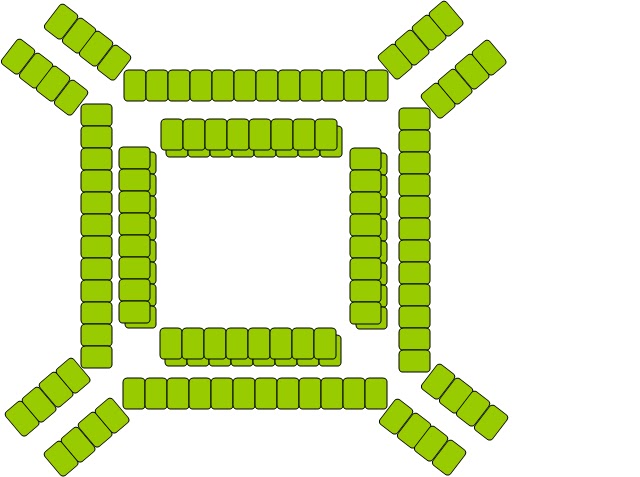
2018年9月27日木曜日

Hangzhou mahjong rules

This is one of the simplest and furthest variants of the game as far as I know (contenders include the Shenzhen version for simplicity and Sichuan "bloody battles" for inventiveness) that focuses on banker-non banker rivalry and use of wildcards.

(25 September 2018)Corrected where to pick a fortune indicator from.
(27 September 2018)Reverted the way fortune indicator is selected based on several photographed evidences.
(7 October 2018)Added liability rules for claimed win.
(8 October 2018)Added some variations.
(10 October 2018)Added more variations and moved optional liability rules to the variation section.
(14 October 2018)Based on comparison of rules of a competition and online gaming, made the three open set liability only applicable for wins by tiles drawn from the wall, and its application for wins by claiming a variation.

Equipments

  • 136 tiles of three suits (characters, circles, bamboos) and honors (four winds and three dragons). The eight flower tiles (four seasons and four flowers) are not used.
  • Two dice.
  • Poker chips or anything to keep score of each player.

Prior agreement

The players agree on when to finish, how much a point is worth, and maximum amount of loss. Since players do not take turns to become banker (dealer), when to finish playing has to be agreed upon in terms of time. If it is hours long, it is advisable to restart from the seating procedure every hour or so. Since there are no limits for scores of winning hands, it is vitally important to agree on maximum amount of loss, typically 40, 50 or 100, and each player has that amount of poker chips before starting. When a player loses all the chips, he/she does not have to pay anything, no debt is incurred, but he/she can still receive full amount when he/she wins.

Seating

It is taken seriously as a very influential element of players' luck and therefore done in a formal fashion. Its details may differ from one group to another.
One of the players, e.g. the youngest, picks four tiles of east, south, west and north, one tile for each direction, places them face down and shuffles them well.
Another player, e.g. the eldest, throws the two dice, counts himself/herself as one, the player to his/her right as two, and so on counter-clockwise, and who is sitting in the seat of the sum of the two dice draws a tile he/she likes, followed by each player counter-clockwise. Alternatively, the shuffled tile are placed face down in a row, flanked by an odd-numbered and an even numbered tile at each end to determine from which end the tiles are taken. Yet another way is to take a tile at will after the shuffling without throwing the dice. Who picks east remains seated, or moves to the seat chosen as east by any appropriate means. The south player moves to the right of the east, west opposite, and north left.

Building walls

All the tiles are turned face down and shuffled well by the four players. Each player builds a wall of 17 tile wide and two tile high with all tiles facing down. The four walls are placed around the center of the table to form a rectangle, or the right ends are pushed forward to make the shape slightly rotated counter-clockwise.

Banker (庄家)

The first banker is chosen by roll of two dice by the east player. The roll is counted just like when the seats are determined or any other occasions. Alternatively, each player throws two dice and who rolls the highest becomes the first banker. A winner of a hand becomes the banker of the next hand. The banker stays when he/she wins or when a hand ends in a draw.

Breaking a wall

The banker throws two dice and the player in the position of the sum counts the same (the sum) number of stacked pairs from the right end of his/her wall to left and breaks open a gap between the last counted pair and next one. The wall is used clockwise from the gap unlike everything else in the game, that is counter-clockwise. The top tile of the head pair is used before the bottom one, followed by the next pair. Tiles drawn after kong are taken from the tail of the wall, and in the Hangzhou variant, they are used in the real reverse order, i.e., the bottom tile of the tail pair is taken first before the top one.

Deal

Starting from the banker and counter-clockwise, each player takes four tiles at once from the head of the wall in turn, repeated three times to have twelve tiles in hand. The tiles are arranged in a row and placed face down. Then the banker takes first and fifth tile, i.e. top tiles of the first and third pairs from the head of the wall, and each of the remaining three players takes one tile in turn.

After the banker grabs fourteen tiles and the others thirteen, the players turns his/her tiles up for him/her to see and no one else.

Fortune tiles (财神)

A fortune tile is a wildcard and can be substituted for any tile in a winning hand. After the deal, right neighbour of who broke the wall counts as many pairs backward from the tail of his/her wall as the number rolled to break the wall, and flips the top tile of the last counted pair. The face up tile and the one beneath it will not be used in the hand; they are skipped. The face up tile is the "fortune" indicator, the other three identical ones "fortune" tiles, and white dragons face value of the fortune indicator. For example, if the face up tile is 4 Bams, the other three tiles of 4 Bams are "fortune" and white dragons 4 Bams.

Play of tiles

Starting from the banker and counter-clockwise, the players repeat the following in turn until one of the players wins or the hand ends in a draw.
  • Unless it is the first turn of the banker who already has one extra tile in his/her hand, the current player draws the first tile of the wall from its head.
  • If the player cannot win or does not want to do so, he/she discards a tile in front of him/her. In Hangzhou, unlike many other places in China, discarded tiles are not mixed together and kept separate for each player, arranged neatly in rows, with newer tiles placed after older ones.

Winning hand

A winning hand is either
  • an eye and four sets, or
  • seven pairs.
An eye or a pair is two identical tiles.
A set is a run, a pung or a kong.
A run is three tiles of a suit in numerical order.
A pung is three identical tiles.
A kong is four identical tiles melded with a kong call.
A player can substitute fortune tiles for any tiles in a winning hand so long as they are not part of open sets or kong.

Chow (吃)

If two tiles in player's hand and a tile just discarded by his/her left side neighbour would be a run when put together, he/she can make an open (or exposed, as opposed to closed or concealed) run from these tiles by saying 'chow', discarding a tile, laying down the two tiles face up to the left of his/her hand, and putting the claimed tile to their left end rotated 90 degrees for easy identification of the three set liability. A player cannot add or remove tiles to or from open runs. An open run cannot contain fortune tiles. An open run can contain a white dragon because it is not a wildcard but is always seen as a tile of the fortune indicator. After a chow, turn moves to the right side neighbour of who has done the chow.

Pung (碰)

If a player has two identical tiles in his/her hand and the same tile is just discarded by any other player, he/she can make an open pung by saying 'pung', discarding a tile, laying down the two tiles face up to the left of his/her hand, and putting the claimed tile to their left or right end rotated 90 degrees if the tile is claimed from the left or right side neighbour, respectively, or the three tiles put together without any tiles rotated when the tile comes from the player sitting across the table.
A player cannot remove tiles from open pung. An open pung cannot contain fortune tiles. An open pung can contain white dragons.
If two players say pung and chow simultaneously, the pung wins over the chow. After a pung, turn moves to the right side neighbour of who has done the pung.
Some play that a player cannot pung an identical tile as he/she missed before his/her turn comes if he/she missed a tile he/she could have pung'ed. A turn is regarded to have come if it is passed by a pung or a kong.

Kong (杠)

A kong requires a 'kong' declaration, melding and drawing a supplementary tile. A set of four identical tiles is not a kong without these actions. There are three different ways to do a kong.
a) closed kong. If a player has four identical tiles in his/her hand and it is his/her turn, he/she can make a kong by saying 'kong' and laying down the four tiles face down to the left of his/her hand.
b) filling (open) kong. If a player has a tile identical to those of his/her open pung and it is his/her turn, he/she can make a kong by saying 'kong' and adding the tile to the pung.
c) direct (open) kong. If a player has three identical tiles in his/her hand and the same tile is just discarded by any other player, he/she can make a kong by saying 'kong', laying down the three tiles face up and adding the discarded tile to them just like an open pung.
After laying down the tiles, the player who is doing a kong draws a supplementary tile from the tail of the wall and discards a tile. Note that, in Hangzhou, the bottom tile is drawn before the top one when one takes a kong supplement tile. A player cannot add or remove tiles to or from a kong, open or closed. A kong cannot contain fortune tiles. One can make a kong of white dragon. If two players say kong and chow simultaneously, the kong wins over the chow. After a kong, turn moves to the right side neighbour of who has done the kong.

Win (胡牌)

If tiles in a hand of a player and those laid down for chow, pung or kong form a winning hand together with another tile, the player can declare win by saying 'hu' (胡), or whatever all the players can understand as such, and revealing his/her hand. A hand ends when a player wins. It is a custom that not only the winner but all the other players reveal their hands.

There are three ways to win:
  • an own tile (自摸): a tile to complete the hand is drawn from the wall either from its head or tail, which is not brought into his/her hand but placed beside face up on the table;
  • claiming a discarded tile (放冲,点炮): a tile to complete the hand has just been discarded by other player; or
  • robbing a kong (拉杠): a tile to complete the hand is about to be added to an open pung  in a (failed) attempt at a kong.

A player can always win by his/her own tile.
Win by claiming or robbing a kong is only possible when the banker is staying for three or more hands, and only between the banker and a non-banker. A non-banker can never win by claiming discarded tile or robbing a kong of another non-banker.

There can only be one winner in a hand; when more than one non-bankers declare win by claiming a tile discarded by banker, the one whose turn is closest to the banker is the winner.
A discarded fortune tile can never be claimed for winning.
A player can win by completing a run or a pung containing a fortune tile with a discarded tile or a robbed kong.
A win takes precedence over kong, pung or chow calls.
Some play that a player cannot win by claiming an identical tile as he/she missed before his/her turn comes if he/she missed a winning tile. A turn is regarded to have come if it is passed by a pung or a kong.

Draw

The 10 pairs or 20 tiles will always be left unused in any cases, including the two tiles of the fortune indicator pair. If no one wins when the wall becomes 10 pair/20 tiles long, the hand is a draw and no payments are made for that hand.

Scoring

The winner is paid according to this payout scheme:
  • Each non-winner pays a unit to the winner in case of a win by own tile.
  • Who discarded the winning tile pays a unit to the winner in case of a win by claiming.
  • Payment to or from the banker is doubled when he/she is not staying (平庄,1牢),
    multiplied by four when he/she is staying for two hands (2牢), and
    multiplied by eight when he/she is staying for three or more hands (3牢).

The score is doubled for any of these conditions. These doubles apply to payments between non-bankers as well as those between banker and non-banker.
  • wild eye (暴头) (x2): when the winning hand is an eye calling hand with a fortune tile. Although one can win by any tile, this type of hands can only be won by an own tile and never by claiming or robbing a kong, even when the banker is staying for three or more hands.
  • fortune float (财飘) (x2, i.e. x4 including wild eye):  when a player has two fortune tiles and four completed sets (or six pairs), declines to win immediately, discards a fortune tile instead, and wins by wild eye in his/her next turn. The other players cannot chow, pung, do open kong, or win by claiming, but they can do closed kong or win by an own tile in their turns right after a forture tile is discarded. The rules is back to the normal when, for whatever reasons, the floating player does not win in his/her next turn. Some plays that the 'floating' player has to wait his/her next turn to win, while some plays that he/she can kong, pung or chow before his/her turn comes provided that he/she can win by kong-bloom or can do another round of fortune float by acquiring a substituted tile by that pung/chow.
  • double float (双飘) (x4, i.e. x8 including wild eye): when a floating player obtains a substituted tile or a fortune tile itself from the wall, either by his/her turn or kong supplement, discards it to do another round of fortune float and wins by wild eye. One can mix kong bloom or kong streak before, during or after double float. If floating player is allowed to chow, pung or do an open kong, he/she can keep double float going by discarding another fortune right after that.
  • kong bloom (杠开) (x2 for each kong in streak): when a hand is won by a kong supplement tile. This is always deemed as an own tile win. A kong streak is a series of kong without interrupted by other players' turns, i.e. kong by kong supplement. The only exception is fortune float. A kong streak is not broken by fortune float.
  • robbing a kong (拉杠) (x2): some allows it when the banker is staying for *two* or more hands instead of the standard of three. It is scored as an own tile win but the player whose kong was robbed is liable for all the payments.
  • seven pairs (七对) (x2, x4 without fortune): when the winning hand has seven pairs. Some (many?) play that the extra double for seven pairs without fortune is not awarded in case of win by claiming or robbing.
  • deluxe (豪华) (x2 for each): when there are four identical tiles as two pairs in seven pairs. Fortune cannot be used in the four tiles. Kong is not allowed.
Theoretically maximal win is a streak of four kong (x16) and double float (x8) when the banker stays for three hands or more (x8) (三牢四杠双飘), that is 1024 times a unit.

Exceptions to the payout scheme

Three set liability and counter-liability (3摊承包、反承包). When player A does chow/pung/open kong three times from player B, B is liable for all the payments made to A (a three set liability), and A is doubly liable for all the payments to B (a three set counter-liability) if A or B has won by a tile drawn from the wall. Since open sets show who gave discarded tiles, when a player has three open sets of the same shape, it is clear for everyone that the player and another pointed by these sets have liability and counter-liability relationships. When A wins, B pays for himself as well as the other two players. When B wins, A pays his/her due as well as the other two players, everything doubled. When a winner has more than one liability or counter-liability relationships, he/she can receive full amount from each of such relationships. In particular, when A and B do chow/pung/open kong three times each other and one of them wins, the other party is liable and counter-liable, so has to pay three times the total amount.

Robbing a kong (拉杠). If a player wins by robbing a kong, the winning hand is scored as if it were a win by a tile drawn from the wall, but the player whose kong was robbed pays for the other two losers as well as him/herself.

Irregularities

False win. A player declaring a false win has to pay amount he/she intended to receive.

Long/short hand. A player who has too many or too few tiles in his/her hand,  e.g. 11, 12, 15 etc, has to keep playing but he/she cannot win.

Variations

Restriction on the three open set liability. Some play that the three open set liability should only occur between banker and a non-banker, and prohibit chow/pung/kong between non-bankers that would result in a liability relationship. Some only prohibit three chows between non-bankers and allow liability to be estabilished if there is at least one pung/kong in three open sets. Some apply one of these restrictions only when banker stays three or more hands. Some do so whenever banker stays. Some disallow more than two chow/pung/kong from same player all the time to avoid complications resulting from different liability practices among different player groups.

Liability for win by a discarded tile. Some apply the three open set liability to win by a discarded tile as well as win by a tile from the wall, so that a player who gave (or received) three open sets to (or from) the winner has to pay the full (or twice the full) amount in addition to the payment by discarding player, who has to pay double or triple if he/she happens to be liable or counter-liable too.

Second half liability of float (财飘后半场承包). If a floating player is allowed to do chow, pung or open kong in a fortune float round, some play that a player who discards chow, pung or open kong tile to keep the float/kong streak going is solely liable for any doubles made after the discarding, while three players have to pay for score made before that.

Permanent fortune (白板财神). Some, on automatic dealing table, do not flip an indicator but make White dragons permanent fortune tiles. This is done to increase number of fortune tiles that are main source of higher scoring hands in the game.

Wall-only. Some, mostly in combination with the permanent fortune option, play that the only eligible form of winning is by drawing a tile from the wall, either from its head or tail, even when the banker is staying for three or more hands.

Ten honours (十风). Some play that continuously discarding 10 or more honour tiles from the start of a hand is a winning condition. Some score 10 tiles as win by an own tile, 11 wild eye, and so on, while some score 10 tiles as wild eye. This appears to be used only in online gaming as some say they have never seen it in real games. There are no consensus on what happens if a discarded tile is punged or if a player attempting it does fortune float.

Immediate third time banker. Some play that, mostly in online games, the banker staying count is immediately brought up to three when a roll of dice to break the walls meets certain conditions, like a double or high number.

2018年9月20日木曜日

Xiamen (Amoy) mahjong rules

It features unique wall layout and rituals for that, as well as somewhat unusual scoring system based on multiples instead of doubles. Although points for sets and flowers may appear slightly complicated, they add varieties to outcome of the game that would be somewhat monotonous otherwise.

(9 November 2018)Added irregularities section and some more variations.
(10 October 2018)Added Quanzhou scoring and a couple of variations.

Equipments

144 tiles of three suits (characters, circles, bamboos), honors (four winds and three dragons) and the eight flower tiles (four seasons and four flowers).
Two dice.

Seating

One of the players, e.g. the youngest, picks four tiles of east, south, west and north, one tile for each direction, places them face down and shuffles them well.
Another player, e.g. the eldest, throws the two dice, counts himself/herself as one, the player to his/her right as two, and so on counter-clockwise, and who is sitting in the seat of the sum of the two dice draws a tile he/she likes, followed by each player counter-clockwise. Who picks east remains seated, or moves to the seat choosen as east by any appropriate means. The south player moves to the right of the east, west opposite, and north left.

Building walls

The four players turn all the tiles face down and shuffle them together. Each player arranges four horizontal rows of eight tiles in front of him/her, with all tiles facing down and neighbouring rows touching each other. Then he/she adds two tiles to each end of the third row from the center of the table to make it twelve tile wide, pushes it forward together with the first and second rows, and puts the second row on top of the first. Finally he/she breaks the last remaining row in two halves, holds each set of four tiles in each hand, and places them at each end of the twelve tile row with leftmost and rightmost ends slanted toward him/herself. There are no distinction between the wing parts and the middle parts of the outer walls. They are arranged in this way so that they can fit comfortably in a mahjong table.


Deal

The banker throws two dice to choose who takes the tiles first. Rolls of the dice are counted from who throws them as one, whose right side neighbour as two, and so on counterclockwise until the sum of the pips are reached. The player chosen by the roll takes first two stacked pairs of each wall, his/her right neighbour the third and fourth, his/her opposite the fifth and sixth, and his/her left neighbour the last two, counting clockwise unlike everything else in the game, which is counterclockwise.

Breaking (outer) wall

The player who took the first two stacks from the wall throws the dice to choose who breaks the outer wall. The player chosen by the roll count tiles of his/her outer wall from the right end (including the wing) as one and clockwise until the sum of the pips, and move the wall slightly so that there is a gap between the last counted tile and the next one. The gap marks the head and the tail of the wall. The banker takes the first tile from the head of the wall to have 17 tiles. Then each player turns his/her tiles up for him/her to see and no one else. Because a player starts with no less than 16 tiles, it is a common practice to arrange them in two rows, front and rear.

Melding flower tiles

The players lay all flower/season tiles in their hands down, in front of him/her or right hand side. Then each player draws same number of tiles from the tail of the wall, starting from the banker and counterclockwise. If a player draws a season or flower tile, he/she lays it down immediately and wait until his/her next turn to draw a supplement tile. This continues until no one has season and flower tiles in his/her hand.

Choosing Gold tile

After melding flowers and drawing supplement tiles, the player who broke the wall throws two dice, counts tiles from the current tail of the wall counter-clockwise, and turns the tile at the sum of the pips face up. This is the Gold indicator, the other three identical tiles are Gold tiles and White Dragons the face value of the Gold indicator. For example, if the indicator is 8 Circles, the other three 8 Circles are Gold and White Dragons 8 Circles. A Gold tile can be substituted for any tiles but seasons and flowers. If a season or flower is turned up as the indicator, it is turned back and the player who broke the wall rolls the dice again.

Winning hand

A winning hand is one pair and five sets. A pair is two identical tiles. A set is a run, a pung or a kong. A run is three tiles of a suit in numerical order, for example, 2 Bams, 3 Bams and 4 Bams. A pung is three identical tiles. A kong is four identical tiles declared and melded. A set of four identical tiles is not a kong without a kong call and melding.

Play of the hand

Starting from the banker and counter-clockwise, each player performs these actions in turn:
(drawing) Except in the first turn of the banker who has one extra tile in his/her hand, the current player draws a tile from the head of the wall; if he/she draws a flower tile, he/she melds it and draw a supplementary tile from the tail of the wall;
(discarding) Unless he/she has a winning hand and wants to win, he/she discards one tile that has not been melded from his hand.

Following discarded honors

If a player has a singleton honor and a tile identical to it has already been discarded in current hand, he/she must discard it before other honors and suit tiles. If there are more than one such honors, he/she can freely choose a tile to be discarded from them.

Chow

If two tiles in player's hand and a tile just discarded by his/her left side neighbour would be a run when put together, he/she can make a run from these tiles by saying 'chow', discarding a tile, laying down the two tiles face up to the left of his/her hand, and adding the discarded tile to them. A chow'ed run cannot contain a Gold tile. No tiles can be added or taken from a chow'ed run. After a chow, turn moves to the right side neighbour of the player who has done the chow.

Pung

If a player has two identical tiles in his/her hand and the same tile is just discarded by any other player, he/she can make a pung by saying 'pung', discarding a tile, laying down the two tiles face up to the left of his/her hand, and adding the discarded tile to them. A pung'ed set cannot contain Gold tiles. No tiles can be taken away from a pung'ed set. After a pung, turn moves to the right side neighbour of the player who has done the pung.

Kong

If a player has four identical tiles in his/her hand and it is his/her turn, he/she can make a kong by saying 'kong' and laying down the four tiles to the left of his/her hand. If a player has a tile identical to those of his/her layed down pung and it is his/her turn, he/she can make a kong by saying 'kong' and adding the tile to the pung. If a player has three identical tiles in his/her hand and the same tile is just discarded by any other player, he/she can make a kong by saying 'kong', laying down the three tiles face up and adding the discarded tile to them. In all of its three variations, the player who does kong draws a supplementary tile from the tail of the wall and discards a tile. After a kong, turn moves to the right side neighbour of the player who has done the kong.

Win

If tiles in a hand of a player and laid down for chow, pung or kong form a winning hand together with another tile, the player can declare win. A hand ends when a player wins. The winning tile is a tile drawn from the wall, either from its head or tail, just discarded by other player, or a tile to be added to a pung in an (failed) attempt at a kong. The last way is called robbing a kong. One cannot win by a discarded Gold tile. There is only one winner in a hand. If more than one players declare win by a same discarded tile, one whose turn is closest to the player discarding the winning tile wins. Some play that a player who has a gold tile in his/her hand can only win by a wall tile.

Dead wall and draw

16 tiles in the wall are always left unused. If nobody wins when there are only 16 tiles are left in the wall, the hand ends in a draw.

Scoring

The winner receives score of his/her hand from each of the other players. Score of a winning hand is (base + flowers) x multiplier. The base is 2 in case of payment between the banker and a non-banker, and 1 between non-bankers. The banker's base is doubled each hand he/she stays and reset to 2 when the banker changes.

Flowers (it's "water" in Xiamen but water is uncountable in English...) are number of flower and gold tiles (discarded gold tiles do not count) as well as these scores for each set in winner's hand:
  • honor: open pung 1, closed pung 2, open kong 3, closed kong 4
  • suits: open pung 0, closed pung 1, open kong 2, closed kong 3
"Open" here means a set containing discarded tile, and "close" those made solely of tiles drawn from the wall.
A set of four seasons or flowers is worth 8 flowers instead of 4.

Multipliers are:
  • Common Win: x1. A win where none of the below apply. A win by a discarded tile.
  • Win by a wall tile or robbing a kong: x2.
  • Three gold knocker: x3. This is an exception to the winning hand rules, in that it only requires three gold tiles and the rest does not have to form sets or a pair, but it is only allowed just after a deal or last turn before a draw. If a player have them after deal and melding of flowers, it becomes x4 instead of x3.
  • Gold float: x4. When a player has five sets completed and waiting for an eye with a Gold tile. He/she can win with any tiles this way, but, in this particular case, he/she can only do so with a tile from the wall.
  • Robbing a gold: x4. The other exception to the winning hand rules. It is when a player can win by claiming the gold indicator right after a deal and melding of flowers, and in case of the banker, first discarding. When more than one player can rob a gold, non-banker wins the banker.
  • Heavenly and earthly win: x4. Heavenly win is when the banker has a winning hand right after deal and melding of flower tiles. Earthly win is when a non-banker wins by the banker's first discard in a deal. 
  • Double float: x8. When a player discards a gold tile and win by Gold float in his/her next turn. During a float round, the floating player cannot win by claiming a discarded tile and the other players cannot claim discarded tiles for chow, pung, or kong. Some allow non-floating player to win by a discarded tile during a float round, while others forbid that.
  • Triple float: x12. When a player attempts double float, draws a tile he/she substitutes a gold tile for or a gold tile itself, and discards the float tile again to do another round of float to win by gold float.

Irregularities

Long or short hand. A player who has too many or too few tiles in his/her hand,  e.g. 11, 12, 15 etc, cannot win in that hand.

Wrong chow, pung, kong or drawing. A player who did a wrong chow, pung, kong or drawing cannot win in that hand.

False win. A player who declares a false win has to pay each player the amount he/she could have received from him/her if it were a valid win.

Variations

Quanzhou (泉州) scoring. They use slightly different scoring in Quanzhou:
  • The base of banker is increased by one when he/stays. Some increase it by one times multiplier of banker’s win instead.
  • An open kong made from an open pung has the same number of flowers as a closed pung.
  • Some count the same number of flowers in an open pung as a closed pung.
  • There are no bonus flowers for set of four flower/season tiles.
  • The multipliers are 1x for Common win, 2x for Win by a wall tile or Robbing a kong, 3x for Gold float, 6x for Double float, 9x for Triple float, 3x for Three gold knocker. Robbing a gold and Heavenly win are not recognised. When a player collects all the eight flower and season tiles, he/she wins immediately regardless of his/her hand with 3x multiplier.

Restriction on common win. Many play that a player who has gold tile in hand cannot win by claiming a discarded tile.

Missed win or pung. Some play that a player who missed a win or a pung (including an open kong) has to wait until his/her turn to come or pass before winning by claiming or doing a pung on the same tile.

Required float. Some play that a player who has three gold tiles has to win by three gold knocker, gold float or better.

False float. Some play that discarding a gold tile and not floating is an offense and who does so forfeits his/her right to win in that hand.

Inflated bases. Some multiply the bases by 5 (10 for banker, 5 for non-bankers), 8 (16 for banker, 8 for non-bankers) and so on, to reduce influence of flower counts over payouts.

2016年3月6日日曜日

Beijing mahjong rules

Despite being a variant of the national capital, it is rather idiosyncratic just like many regional rules and virtually unknown in the rest of the country. It is unusual to have bias against pung and chow, not that extreme like Japanese "Reach" which has accumulating penalties, though.

Equipments

136 tiles of three suits (characters, circles, bamboos) and honors (four winds and three dragons). The eight flower tiles (four seasons and four flowers) are not used.
Two dice.

Prior agreements

The players agree on what patterns to be recoginsed, how much doubles certain patterns worth, what optional rules to use, and how much a point is worth. A common arrangements include 1, 2, 4 (a point is 1 RMB) and 2, 4, 8 (2 RMB per point).

Seating

It is taken seriously as a very influential element of players' luck and therefore done in a formal fashion. Its details may differ from one group to another.
One of the players, e.g. the youngest, picks four tiles of east, south, west and north, one tile for each direction, places them face down and shuffles them well.
Another player, e.g. the eldest, throws the two dice, counts himself/herself as one, the player to his/her right as two, and so on counter-clockwise, and who is sitting in the seat of the sum of the two dice draws a tile he/she likes, followed by each player counter-clockwise. Alternatively, the shuffled tile are placed face down in a row, flanked by an odd-numbered and an even numbered tile at each end to determine from which end the tiles are taken. Yet another way is to take a tile at will after the shuffling without throwing the dice. Who picks east remains seated, or moves to the seat chosen as east by any appropriate means. The south player moves to the right of the east, west opposite, and north left.

Building walls

All the tiles are turned face down and shuffled well by the four players. Each player builds a wall of 17 tile wide and two tile high with all tiles facing down. The four walls are placed around the center of the table to form a rectangle, or the right ends are pushed forward to make the shape slightly rotated counter-clockwise.

Banker (庄家)

The first banker is the east player. The banker stays when he/she wins or when a hand ends in a draw, and moves to the right side neighbour of the banker when a non-banker wins. A game is four banker rotations.

Breaking a wall

The banker throws two dice and the player in the position of the sum counts the same (the sum) number of stacked pairs from the right end of his/her wall to left and breaks open a gap between the last counted pair and next one. The wall is used clockwise from the gap unlike everything else in the game, that is counter-clockwise. The top tile of the head pair is used before the bottom one, followed by the next pair. Tiles drawn after kong are taken from the tail of the wall.

Deal

Starting from the banker and counter-clockwise, each player takes four tiles at once from the head of the wall in turn, repeated three times to have twelve tiles in hand. The tiles are arranged in a row and placed face down. Then the banker takes first and fifth tile, i.e. top tiles of the first and third pairs from the head of the wall, and each of the remaining three players takes one tile in turn.

Wild tiles (混儿)

After the banker has 14 tiles and the other players 13, the banker takes the first tile from the head of the wall, and places it face up on the wall near its tail for everyone to see. The face up tile is the wild indicator and the four tiles of the same suit and one greater in number are the wild tiles. If it is a nine, one's of the same suit are wild; if it is a wind, next in the order of East-South-West-North are wild, if it is a dragon, next in the order of Red-Green-White. A wild tile can be substituted for any tile in a winning hand. A player cannot make an open set or a kong containing one or more wild tiles. A player cannot discard a wild tile, or he/she forfeits the right to win in that hand.  A player cannot win by claiming a discarded wild tile, either, but he/she can complete a set or a pair of eyes containing a wild tile to win.

After the deal and the selection of wild tiles, the players turn his/her tiles up for him/her to see and no one else.

Play of tiles

Starting from the banker and counter-clockwise, the players repeat the following in turn until one of the players wins or the hand ends in a draw.
  • Unless it is the first turn of the banker who already has one extra tile in his/her hand, the current player draws the first tile of the wall from its head.
  • If the player cannot win or does not want to do so, he/she discards a tile in front of him/her. Discarded tiles are placed haphazardly in the center of the table so that one has to remember who discarded what.

Winning hand

A winning hand is either
  • an eye and four sets, or
  • seven pairs.
An eye or a pair is two identical tiles. A set is a run, a pung or a kong. A run is three tiles of a suit in numerical order. A pung is three identical tiles. A kong is four identical tiles melded with a kong call.
A player can substitute wild tiles for any tiles in a winning hand so long as they are not part of open sets or kong.

Chow (吃)

If two tiles in player's hand and a tile just discarded by his/her left side neighbour would be a run when put together, he/she can make an open (or exposed, as opposed to closed or concealed) run from these tiles by saying 'chow', discarding a tile, laying down the two tiles face up to the left of his/her hand together with the claimed tile. A player cannot add or remove tiles to or from open runs. An open run cannot contain fortune tiles. After a chow, turn moves to the right side neighbour of who has done the chow.

Pung (碰)

If a player has two identical tiles in his/her hand and the same tile is just discarded by any other player, he/she can make an open pung by saying 'pung', discarding a tile, laying down the two tiles face up to the left of his/her hand together with the claimed tile. A player cannot remove tiles from open pung. An open pung cannot contain fortune tiles.
If two players say pung and chow simultaneously, the pung wins over the chow. After a pung, turn moves to the right side neighbour of who has done the pung.

Kong (杠)

A kong requires a 'kong' declaration, melding and drawing a supplementary tile. A set of four identical tiles is not a kong without these actions. There are three different ways to do a kong.
a) closed kong. If a player has four identical tiles in his/her hand and it is his/her turn, he/she can make a kong by saying 'kong' and laying down three of the four tiles face down and one of them face up to the left of his/her hand.
b) filling (open) kong. If a player has a tile identical to those of his/her open pung and it is his/her turn, he/she can make a kong by saying 'kong' and adding the tile to the pung.
c) direct (open) kong. If a player has three identical tiles in his/her hand and the same tile is just discarded by any other player, he/she can make a kong by saying 'kong', laying down the three tiles face up together with the discarded tile.
After laying down the tiles, the player who is doing a kong draws a supplementary tile from the tail of the wall and discards a tile. A player cannot add or remove tiles to or from a kong, open or closed. A kong cannot contain fortune tiles. If two players say kong and chow simultaneously, the kong wins over the chow. After a kong, turn moves to the right side neighbour of who has done the kong.

Win (胡牌)

If tiles in a hand of a player and those laid down for chow, pung or kong form a winning hand together with another tile, the player can declare win by saying 'hu' (胡), or whatever all the players can understand as such, and revealing his/her hand. A hand ends when a player wins.

There are three ways to win:
  • an own tile (提溜): a tile to complete the hand is drawn from the wall either from its head or tail, which is not brought into his/her hand but placed beside face up on the table;
  • claiming a discarded tile (点炮): a tile to complete the hand has just been discarded by other player; or
  • robbing a kong (抢杠): a tile to complete the hand is about to be added to an open pung in a (failed) attempt at a kong. The exception is one of three sets of flush, which can be completed by robbing a closed kong as well.

A player can always win by his/her own tile.
A player can win by claiming a discarded tile or robbing a kong only when he/she does not have open sets or more than two wild tiles.
A player can only win by his/her own tile when he/she has four sets or six pairs completed and calls for a pair of eyes with a wild tile.
Some play that a player who has missed a winning tile cannot win by claiming a discarded tile until his/her turn comes or is passed by a pung or a kong.

A player who discards a wild tile forfeits his/her right to win in that hand.
A player cannot win by claiming a discarded wild tile.
A player can win by completing a run or a pung containing a wild tile with a discarded tile or a robbed kong.

A win takes precedence over kong, pung or chow calls.

Draw

A certain number of stacks of tiles remain unused in a hand. It has to be agreed upon before starting. Common arrangements include:
  • 7 stacks,
  • 7 stacks when number of kong is 0 or 1, 8 stacks otherwise, or
  • 14 tiles when there are no kong, increasing by one at each kong.
The wild indicator is not used in any hands but not counted as part of these tiles.
When there are only that amount of tiles remaining in the wall and no one has won, the hand ends in a draw.

Scoring

Each non-winner pays the winner a unit with all applicable doubles applied. The doubles are:
  • Banker (庄家): When the banker wins, or when the banker pays.
  • Closed (门清): When the winner does not have open sets. He/she still can win by claiming the fourth sets and scores a double for a closed hand.
  • Own tile (提溜): When the winner wins by a tile drawn from the wall, either from its head or tail; or when the paying player discarded the winning tile.
  • Straight (没混,无混): When the winning hand does not have any wild tiles, or all of them are used at their face value.
  • Flush (龙): When the winning hand has three runs 123, 456 and 789 of a suit.
  • Seven Pairs (七对): When the winning hand is seven pairs.
  • Deluxe (豪华): When two pairs in seven pairs are four identical tiles, none of which are wild tiles, and not a kong. A double is awarded for each of such sets. A wild tile cannot be substituted for one of four tiles in Deluxe.
  • Catch Five (捉五魁,捉五): When the winning hand is a gap calling hand with 4C and 6C calling for 5C or seven pairs calling for 5C. A wild tile cannot be substituted for a 5 Character as a winning tile or an eye calling tile in Catch Five.
  • Kong Bloom (杠开,杠疵): When a hand is won be a tile drawn from the tail of the wall as part of a kong. Unlike the other doubles, the double for Kong Bloom applies to scores for kongs as well as a winning hand.

Optional doubles are:
  • Wild Eye (混悠): when the winning hand has four sets or six pairs completed and calls for a pair of eyes with a wild tile. Some treat this as a sort of Straight hand and scores a double.
  • Native Wild Flush (本混龙): when a wild tile whose face value is of the same suit as Flush tiles is substituted for one of the nine tiles of Flush. Some treat this as a sort of Straight hand and scores a double.

Rare events

The points for these events have to be agreed upon before starting a session of the game. They are usually given somewhat high scores, typically 20, but not excessively so because of their purely chance-based nature. They are not doubled for the banker, wall win, or discarding.
  • Heavenly Win (天胡): when the banker is dealt a winning hand.
  • Earthly Win (地胡): when a non-banker wins by the first discarded tile by the banker.
  • Wild Kong (混杠): when a player has four wild tiles.

Kong points

The Winner can score 1 point for each open kong and 2 for closed ones he/she made in the hand. If the winner wins by Kong Bloom, these points are doubled. Many players also double them for the banker.

Irregularities

  • False win. If a player declares a win when he/she cannot, he/she pays a) amount he/she falsely claimed to win, or b) predetermined amount usually set to the same as Heavenly Win, Earthly Win or Wild Kong.
  • Long/Short hand. If a player has too many or too few tiles in his/her hand, he/she loses the right to win in that hand but has to keep playing.
  • Discarding wild tile. A player who does so is treated just like long or short hand.

Variations

Upstairs (上楼): when a hand ends in a draw, next hand is said to be on upstairs, where all the scores are doubled. Some play an hand on upstairs too when the banker is staying three or more hands.

Void suit (断门): some require winning hand to have at least one void suit, i.e. lacking Characters, Dots or Bamboos.

Busted banker (烧庄): if each player discards the same tile without interrupted by any pung, chow or kong at the start of a hand, and the hand does not end in a draw, the banker is busted and he/she has to pay predetermined amount of points (typically 10, or a half of Heavenly/Earthly/Wild Kong) to each of the other players.

At most once: some play that a player can do pung or chow only once in a hand. There are no such restrictions on number of direct open kong even if this rule is in effect.

Additional doubles: especially in online games, all or some of Pure one suit (清一色), All pung (对对胡), Single tile hand (大钓), and Win by last tile (海底捞月) are added as double-awarding patterns. Some score additional doubles for some patterns.

Liability for discarding player (点炮包庄,大包): especially in online games, some play that a player who discarded the winning tile pays on behalf of the other two losers as well as him/herself.

2016年1月22日金曜日

Nanchang mahjong rules

Its unique feature is chow of honour tiles, instead of getting rid of them altogether as they have done in Sichuan. Because the game can have as many as seven wildcards, hands without them or not using them as wildcards are richly rewarded.

Equipments

136 tiles of three suits (characters, circles, bamboos), honors (four winds and three dragons). The eight flower tiles (four seasons and four flowers) are not used.
Two dice.

Seating

Use any agreed upon way. The following is an example -- one of the players, e.g. the youngest, picks four tiles of east, south, west and north, one tile for each direction, places them face down and shuffles them well.
Another player, e.g. the eldest, throws the two dice, counts himself/herself as one, the player to his/her right as two, and so on counter-clockwise, and who is sitting in the seat of the sum of the two dice draws a tile he/she likes, followed by each player counter-clockwise. Who picks east remains seated, or moves to the seat choosen as east by any appropriate means. The south player moves to the right of the east, west opposite, and north left.

Building walls

All the tiles are turned face down and shuffled well by the four players. Each player builds a wall of 17 tile wide and two tile high with all the tiles facing down. The four walls are placed around the center of the table to form a rectangle, or the right ends are pushed forward to make the shape slightly rotated counter-clockwise.

Banker

The first banker is chosen by roll of two dice by the east player. The banker stays if he/she wins or in a case of a draw. It moves to the right side neighbour of the current banker if a non-banker wins or the banker is sacked. A session of the game is four banker rotations.

Breaking wall

The banker throws two dice. The player in the position of the sum throw them again and counts the total of the rolls of the banker and him/herself from the right end of his/her wall, the stacked pair in the end as one, the next pair as two and so on clockwise, and breaks open a gap between the last counted pair and next one. The wall is used clockwise from the gap unlike everything else in the game, that is counter-clockwise. The top tile of the head pair is used before the bottom one, followed by the next pair. Tiles drawn after kong are taken from the tail of the wall.

Deal

Starting from the banker and counter-clockwise, each player takes four tiles at once from the head of the wall in turn, repeated three times to have twelve tiles in hand. The tiles are arranged in a row and placed face down. Then the banker takes first and fifth tile, i.e. top tiles of the first and third pairs from the head of the wall, and each of the remaining three players takes one tile in turn.

After the banker grabs fourteen tiles and the others thirteen, the players turn his/her tiles up for him/her to see and no one else.

Fine tiles

After all the players grab their tiles, the banker throws the dice again, counts the rolled number from the tail of the wall, the tail pair as one and *counter-clockwise*, and flips open the top tile of the last counted stack. The face up tile is the fine tile indicator. The other three tile of the indicator become first "fine" (精) tiles and the four tiles of the same suit and one greater in number second fine tiles. If the indicator is a 9, the second fine tiles are 1s of the same suit. If it is a Wind, next one in the order of East-South-West-North is the second ones. If it is a Dragon, next one in the order of Red-Green-White is the second fine tiles. A fine tile can be substituted for any tiles in a winning hand. There are no distinctions between the first and the second ones except for their bonus points.

Winning hand

A winning hand is

  • a pair (called "eyes") and four sets,
  • seven pairs, or
  • fourteen independent tiles.

A set is a run, a pung, or a kong. A run is three tiles of a suit in numerical order, three different wind tiles, or three different dragon tiles. Note that, unlike any other variants of the game, three different honour tiles of a kind can form runs just like suit tiles. A run of dragons is red, green, and white. A run of winds is three different directions, like East, South and North. A pung is three identical tiles. A kong is four identical tiles melded with a 'kong' call.

Play of the hand 

Starting from the banker and counter-clockwise, each player performs these actions in turn:

  • (drawing) Except in the first turn of the banker who has one extra tile in his/her hand, the current player draws a tile from the head of the wall; if he/she draws a flower tile, he/she melds it and draw a supplementary tile from the tail of the wall;
  • (discarding) Unless he/she has a winning hand and wants to win, he/she discards one tile that has not been melded from his hand.

A player can discard a fine tile. A discarded fine tile is not a wildcard any longer and only taken at its face value when it is claimed for a chow, a pung, a kong or a win.

Sacking the banker (抄庄)

When all the players discard the same tile in the first round in a hand without any chow, pung, or kong, the banker is sacked. The hand continues until a player wins or it ends in a draw, when the banker has to pay each of the other three players 5 points for being sacked.

Chow

If two tiles in player's hand and a tile just discarded by his/her left side neighbour would be a run when put together, he/she can make a run from these tiles by saying 'chow', discarding a tile, laying down the two tiles face up to the left of his/her hand, and adding the discarded tile to them. A player can chow runs of honour tiles as well as those of suits. A player can chow runs containing fine tiles as long as they are used at their face values. No tiles can be added to or taken from a chow'ed run. After a chow, turn moves to the right side neighbour of the player who has done the chow.

Pung

If a player has two identical tiles in his/her hand and the same tile is just discarded by any other player, he/she can make a pung by saying 'pung', discarding a tile, laying down the two tiles face up to the left of his/her hand, and adding the discarded tile to them. A player can do pung containing fine tiles so long as they are used at their face values. No tiles can be taken away from a pung'ed set. After a pung, turn moves to the right side neighbour of the player who has done the pung.

Kong

If a player has four identical tiles in his/her hand and it is his/her turn, he/she can make a kong by saying 'kong' and laying down the four tiles to the left of his/her hand, with three of them face down and one face up. If a player has a tile identical to those of his/her laid down pung and it is his/her turn, he/she can make a kong by saying 'kong' and adding the tile to the pung. If a player has three identical tiles in his/her hand and the same tile is just discarded by any other player, he/she can make a kong by saying 'kong', laying down the three tiles face up and adding the discarded tile to them. In all of its three variations, the player who does kong draws a supplementary tile from the tail of the wall and discards a tile. A player can do kong containing fine tiles so long as they are used at their face values. No tiles can be added to or taken from a kong'ed set. After a kong, turn moves to the right side neighbour of the player who has done the kong.
Some play that a player can draw the fine indicator as a kong supplement tile instead of skipping it.

Win

If tiles in a hand of a player and laid down for chow, pung or kong form a winning hand together with another tile, the player can declare win. A hand ends when a player wins. The winning tile is a tile drawn from the wall, either from its head or tail, just discarded by other player, or a tile to be added to a pung in a (failed) attempt at a kong. The last way is called robbing a kong. There is only one winner in a hand. If more than one players declare win by a same discarded tile, one whose turn is closest to the player discarding the winning tile wins. A player cannot win by claiming a tile before his/her turn comes if he/she missed a winning tile. A turn is regarded to have come if it is passed by a pung or a kong.

Dead wall and draw

If no players win when there are 17 stacks of the tiles left in the wall, the hand ends in a draw. Some always leave 34 tiles unused, while some leave 17 full stacks when the last pair is intact and 16 and half when the top tile of the last pair is used as a kong supplement.

Scoring

A winner receives one point from each of the other  players, with all applicable doubles applied.

  • Banker (庄家): x2. When the payment is made to or from the banker.
  • Own tile (自摸): x2. When the winner wins by a tile drawn from the wall.
  • Letting off (点炮): x2. When payment is done by who discarded the winning tile.
  • Fine call (精钓): x2 (or x4 including own tile). When the winning hand has four sets or six pairs completed, calls for a pair of eyes with a fine tile, and is won by an own tile. This type of hands call for any tile but can only be won by an own tile, unless it qualifies as a German hand. If a fine call German hand is won by claiming a discarded tile or robbing a kong, it is not doubled for fine call.
  • Kong bloom (杠开): x2 (or x4 including own tile). When the winner wins by a tile drawn from the tail of the wall as a Kong supplement. It is always an own tile win.
  • Robbing a kong (抢杠): x2. When the winner wins by robbing a kong. It is scored as if it were an own tile win, without the double for own tile.
  • All pung (大七对): x2. When the winning hand is four pung (kong) and a pair.
  • Seven pairs (小七对): x2. When the winning hand is seven pairs. No open sets allowed. There are no additional doubles for four identical tiles as two pairs, unlike well-known variants like Hanzhou or Beijing.
  • Independent tiles (十三烂): x2. When there are no identical tiles, runs or run-calling tiles in 14 winning tiles. No open sets allowed. Honour runs are not considered runs only for the purpose of this hand.
  • Seven stars (七星): x2 (or x4 including indepenent tiles). When there are seven honour tiles in an independent tile hand. A fine tile cannot be substituted for an honour unless it is used at its face value.
  • German (德国): x2+5. When there are no fine tiles in winning hand or all of them are used at their face values. The five extra points are never doubled, in other words, they are added after all doubles are applied.
  • Double German (德中德): x2 (or x4+5 including German). When the winning hand is German and the three losers do not have any fine tiles in their hands (including melded sets).

Special cases

Each of the non-winner pays the winner 20 points in these cases. The doubles for own tile, banker, etc. do not apply.

  • Heavenly win (天胡). When the banker is dealt a winning hand.
  • Earthly win (地胡). When a non-banker wins by claiming the banker's first discarded tile.


Scoring fine tiles, kongs and other bonuses

These payments are done even when a hand ends in a draw, as well as when there is a winner. A player can receive these points even when he/she is not a winner.

Kong bonus

A player receives 2 points for each closed kong from each of the other players, and 1 point for each open kong.

Fine tile bonus

A player receives 2 points for each first fine tile and 1 for each second one in his/her hand including melded sets. If the total is more than or equal to 5 points, it is called "limit breaker" (冲关) and the bonus is multiplied by (total - 3), so:
 5: 5 x 2 = 10
 6: 6 x 3 = 18
 7: 7 x 4 = 28
 8: 8 x 5 = 40
 9: 9 x 6 = 54
 10: 10 x 7 = 70

Domination (霸王)

If a player has fine tiles and the others none, it is called domination and his/her fine tile bonus is doubled.

Fine kong

If a player makes a kong of fine tiles, he/she receives 10 point bonus from each of the other players. A player still can count bonus points in each fine tile although the 10 points do not count towards limit breaker nor are they multiplied for domination or breaking the limit. There are no kong bonus for a kong of fine tiles either.

Sacked banker

A sacked banker pays 5 points to each of the other players.
Some play that the banker pays 5 points to each of the other players when a hand ends in a draw.

2016年1月16日土曜日

Mahjong rules in Yangzhou, Jiangsu -- another regional mahjong with large number of patterns

Yangzhou is where Yangzhou Fried Rice originated, it's also known as birthplace of historical beauties.

Equipments

136 tiles of three suits (characters, circles, bamboos), honors (four winds and three dragons).
Two dice.

Banker rotation and winds

Banker stays if he/she wins and it moves to his/her right side neighbour if a non-banker wins or in case of a draw. Some play that the banker stays if a hand ends in a draw.

Each player is assigned a seat wind: the banker east, his/her right side neighbour south, the player sitting across the table west and his/her left side neighbour north.
A round wind starts with east and changes to south, followed by west and lastly north when banker moves to the first banker of the game.

A session of a game is four banker rotation. Some play eight rotations.

Breaking wall

Use sum of two dice thrown by the banker to determine whose wall to break and the smallest die rather than the sum to number of stacks to leave. The banker grabs 14 tiles before starting a hand and the other players 13.

Play of tiles

  • Can chow as well as pung and kong.
  • If no one wins when there are no tiles left in the wall, the hand ends in a draw, or there's no dead wall.
  • More than one player can win on a same discarded tile.
  • A player has to wait until his/her own turn to win if he/she missed a winning tile.
  • A hand must be at certain score or higher to be eligible for winning. It is set to 7, 10, 13 or 18 points, or the points of Twin Runs or 3 points more than that.


Payout scheme

  • In case of win by own tile, each of three losers pay the winner the score of the winning hand,
  • In case of win by discarded tile, one who discarded the winning tile pays the winner twice the score of the winning hand and the other two losers nothing.

Score of a winning hand is sum of points of all applicable patterns. Points for non-minor patterns tend to become higher in newer rules, along with minimum requirement.

  • Old(?): Twin Runs = Minimum = 7, Mixed One Suit = 10
  • Common: Twin Runs = 10, Minimum = 10 or 13, Mixed One Suit = 15
  • New: Twin Runs = 15, Minimum = 18, Mixed One Suit = 20

1) Minor patterns

  • Fully Closed (门清): 1. no open sets before winning.
  • Common Win (平胡): 1. four runs. the eyes are not honors.
  • Win by Own Tile (自摸): 1.
  • Single Call (丫子,独吊): 1. can win with only one tile, like 1 and 3 calling 2, 1 and 2 calling 3, or eye calling hand.
  • Void Suit (缺一): 1. a winning hand without one suit and honors.
  • End Eyes (幺头): 1. the eyes are 1 or 9.
  • No Terminals (断幺): 1. a winning hand without 1s, 9s and honors.
  • Side-by-side (齐相): 1. two runs in two suits with the same numbers. e.g. 345C 345D
  • Tandem (连副): 1. two runs in tandem in a suit, e.g. 345B 678B.
  • High-low (老少): 1. 123 and 789 in a suit.
  • Closed Pung (子格、招): 1.
  • Open Kong (明杠): 1.
  • Closed Kong (暗杠): 2.
  • (pung of) Seat Wind (门风): 1.
  • (pung of) Round Wind (圈风): 1.
  • (pung of) Dragon (中,发,白): 1.

2) 2/3-3/4 of Mixed = 7/10/15

  • Twin Runs (一板). two identical runs. e.g. 678B 678B

3) Mixed = 10/15/20

  • Mixed One Suit (混一色)
  • All Pung (对对胡)
  • Three Runs Side-by-side (三副同). e.g. 345D 345C 345B
  • Two Tandems Side-by-side (双连双喜,双飘). e.g. 123B 456B 123C 456C
  • Two High-low Side-by-side (双飘). e.g. 123B 789B 123C 789C
  • Straight Flush (一条龙). 1 through 9 of a suit forming three runs.

4) 2--2.5 times Mixed = 20/30/50

  • Four Runs Side-by-side (四副同). e.g. 345D 345B 345C 345D
  • Double Twin Runs (双板板). e.g. 456C 456C 234D 234D

5) Pure = four times Mixed = 40/60/80

  • Pure One Suit (清一色)
  • Triplet Runs (铁板). three identical runs. e.g. 234D 234D 234D
  • Double Twins Side-by-side (双板双喜). e.g. 456C 456C 456B 456B
  • Double Twins High-low (双板双老). e.g. 123D 123D 789D 789D
  • Double Twins in Tandem (双板双连). e.g. 345B 345B 678B 678B

6) Multiples of Pure

  • All Honors (风清): pure x 4 (or pure x 2)
  • Quadruplet Runs (钢板): pure x 8 (or pure x 2). four identical runs. e.g. 123C 123C 123C 123C

7) Combination patterns with bonus points

Only applicable to the 18 point minimum (15 point twins, 20 point mixed) rules.
  • Straight Flush with Twins (板龙): 50. e.g. 123C 456C 789C 456C
  • Mixed One Suit with All Pung (混对对): 50.
  • Mixed One Suit with Straight Flush (混龙): 50.
  • Mixed One Suit with Straight Flush and Twins (混板龙): 80.
  • Pure One Suit with All Pung (清对对): 130.
  • Pure One Suit with Straight Flush (清龙): 130.
  • Pure One Suit with Straight Flush and Twins (清板龙): 160.


Exceptions to the payout scheme

A "liable" player has to pay for him/herself as well as the other two losers.
  • Who gives the third open set that is a chow to a player winning with pure one suit has to pay for the other losers as well as him/herself.
  • If a player chows tiles of the same suit three times, he/she must aim for pure one suit.

2016年1月10日日曜日

Mahjong rules in Fenghua, Zhejiang -- regional mahjong with fairly large number of patterns

Fenghua is a city near Ningbo and famous as the birthplace of Chiang Kai-shek. Its mahjong is unusual in that it has fairly large number of scoring patterns with emphasis on irregular ones like seven pairs and  independent tiles.

Equipments

144 tiles of three suits (characters, circles, bamboos), honors (four winds and three dragons) and eight flower tiles (four seasons and four flowers).
Two dice.

Seating

It is done as in any other variants of the game. Its details may differ from one group to another.

One of the players, e.g. the youngest, picks four tiles of east, south, west and north, one tile for each direction, places them face down and shuffles them well.
Another player, e.g. the eldest, throws the two dice, counts himself/herself as one, the player to his/her right as two, and so on counter-clockwise, and who is sitting in the seat of the sum of the two dice draws a tile he/she likes, followed by each player counter-clockwise. Alternatively, the shuffled tile are placed face down in a row, flanked by an odd-numbered and an even numbered tile at each end to determine from which end the tiles are taken. Yet another way is to take a tile at will after the shuffling without throwing the dice. Who picks east remains seated, or moves to the seat chosen as east by any appropriate means. The south player moves to the right of the east, west opposite, and north left.

Walls

All the tiles are turned face down and shuffled well by the four players. Each player builds a wall of 18 tile wide and two tile high with all tiles facing down. The four wall are placed around the center of table to form a rectangle, or the right ends are pushed forward to make the shape slightly rotated counter-clockwise.

Banker (庄家), seat wind and prevailing wind

The first banker is chosen by roll of two dice by the east player. The roll is counted just like when the seats are determined or any other occasions, i.e. count who throws the dice as one, his/her right side neighbour as two and so on counter-clockwise. Banker stays if he/she wins or in case of a draw. It moves to his/her right side neighbour otherwise. A game is four banker rotations.
Each player is assigned a seat wind: the banker east, his/her right side neighbour south, the player sitting across the table west and his/her left side neighbour north.
A prevailing wind starts with east and changes to south, followed by west and lastly north when banker moves to the first banker of the game.

Breaking a wall

The banker throws two dice and the player in the position of the sum counts the largest pips of stacked pairs from the right end of his/her wall and breaks open a gap between the last counted pair and next one. The wall is used clockwise from the gap unlike everything else in the game, that is counter-clockwise. The top tile of the head pair is used before the bottom one, followed by the next pair. Tiles drawn after kong are taken from the tail of the wall.

Wild tiles (百搭)

A wild tile can be substituted for anything but flower tiles in a winning hand. The player who broke the wall counts pairs in his/her wall from the tail as one and counter-clockwise, and flips the top tile counted as the smallest pips of the dice thrown by the banker to break the wall. The face up tile will not be used in the hand. It is the wild indicator and the other three identical ones wild tiles. If it is one of the four seasons, the other three seasons are wild. If it is one of the four flowers, the other three flowers are wild. A tile cannot be used as a flower tile (which means no melding) when it is wild.

Deal

Starting from the banker and counter-clockwise, each player takes four tiles at once from the head of the wall in turn, repeated three times to have twelve tiles in hand. The tiles are arranged in a row and placed face down. Then the banker takes first and fifth tile, i.e. top tiles of the first and third pairs from the head of the wall, and each of the remaining three players takes one tile in turn.

After the banker grabs fourteen tiles and the others thirteen, the players turn his/her tiles up for him/her to see and no one else.

Melding flower tiles

Starting from the banker, each player takes all flower tiles from his/her hand, lay them down face up to the left of his/her hand and draw same number of tiles from the tail of the wall. If he/she draws flower tiles again, he/she repeats this until there are no flower tiles in his/her hand.

Play of tiles

Starting from the banker and counter-clockwise, the players repeat the following in turn until one of the players wins or the hand ends in a draw.

  1. Unless it is the first turn of the banker who already has one extra tile in his/her hand, the current player draws the first tile of the wall from its head.
  2. If the player has a flower tile, he/she may meld it by laying it down face up and drawing a supplementary tile.
  3. If the player cannot win or does not want to do so, he/she discards a tile in front of him/her.


Winning hand

A winning hand must have all flower tiles melded if any and the other tiles form

  • an eye and four sets,
  • seven pairs,
  • fourteen independent tiles, or
  • all honours.

The eight flower tiles melded by the same player is also a winning hand regardless of the other tiles in his/her hand.
An eye or a pair is two identical tiles. A set is a run, a pung or a kong. A run is three tiles of a suit in numerical order. A pung is three identical tiles.
A kong is four identical tiles melded with a kong call.
A player can substitute wild tiles for any tiles but flower tiles in a winning hand so long as they are not part of open sets or kong. A player can complete a set containing a wild tile with a discarded tile when he/she wins.

Chow (吃)

If two tiles in player's hand and a tile just discarded by his/her left side neighbour would be a run when put together, he/she can make an open (or exposed, as opposed to closed or concealed) run from these tiles by saying 'chow', discarding a tile, laying down the two tiles face up to the left of his/her hand, and putting the claimed tile to their left end rotated 90 degrees for easy identification of liabilities. A player cannot add or remove tiles to or from open runs. An open run cannot contain wild tiles. After a chow, turn moves to the right side neighbour of who has done the chow.

Pung (碰)

If a player has two identical tiles in his/her hand and the same tile is just discarded by any other player, he/she can make an open pung by saying 'pung', discarding a tile, laying down the two tiles face up to the left of his/her hand, and putting the claimed tile to their left or right end rotated 90 degrees if the tile is claimed from the left or right side neighbour, respectively, or the three tiles put together without any tiles rotated when the tile comes from the player sitting across the table.
A player cannot remove tiles from open pung. An open pung cannot contain wild tiles.
If two players say pung and chow simultaneously, the pung wins over the chow. After a pung, turn moves to the right side neighbour of who has done the pung.

Kong (杠)

A kong requires a 'kong' declaration, melding and drawing a supplementary tile. A set of four identical tiles is not a kong without these actions. There are three different ways to do a kong.
a) closed kong. If a player has four identical tiles in his/her hand and it is his/her turn, he/she can make a kong by saying 'kong' and laying down the four tiles face down to the left of his/her hand.
b) filling (open) kong. If a player has a tile identical to those of his/her open pung and it is his/her turn, he/she can make a kong by saying 'kong' and adding the tile to the pung.
c) direct (open) kong. If a player has three identical tiles in his/her hand and the same tile is just discarded by any other player, he/she can make a kong by saying 'kong', laying down the three tiles face up and adding the discarded tile to them just like an open pung.
After laying down the tiles, the player who is doing a kong draws a supplementary tile from the tail of the wall and discards a tile. A player cannot add or remove tiles to or from a kong, open or closed. A kong cannot contain wild tiles. If two players say kong and chow simultaneously, the kong wins over the chow. After a kong, turn moves to the right side neighbour of who has done the kong.

Winning (胡牌)

If tiles in a hand of a player and those laid down for chow, pung or kong form a winning hand together with another tile, or if a player melds eight melded flower tiles, the player can declare win by saying 'hu' (胡), or whatever all the players can understand as such, and revealing his/her hand. A hand ends when a player wins.

There are three ways to win:

  • own tile(自摸): a tile to complete the hand is drawn from the wall either from its head or tail, which is not brought into his/her hand but placed beside face up on the table;
  • claiming a discard tile (放冲,点炮): a tile to complete the hand has just been discarded by other player; or
  • robbing a kong (拉杠): a tile to complete the hand is about to be added to an open pung in a (failed) attempt at a kong.


A player can always win by his/her own tile.
Win by claiming discard is only possible when the hand scores four or more points (before rounded up). It used to be three or more points.
If a player has four sets completed and is calling for a pair of eyes with a wild tile, he/she can win by any tile but he/she must do so with his/her own tile.
There can only be one winner in a hand; when more than one non-bankers declare win by claiming banker's discard, the one whose turn is closest to the banker is the winner.
A discarded wild tile can never be claimed for winning.
A player can win by completing a run or a pung containing a wild tile with a discarded tile or a robbed kong.
A win takes precedence over kong, pung or chow calls.

Draw

The wild tile indicator is always be left unused in any cases. The tile just before it is the bottom tile. A player can pass his/her turn to refuse it. If all the players refuse it, the hand ends in a draw. If a player chooses to draw it, he/she either wins with it or discards it without exchanging it with another tile in his/her hand. If no one wins with the bottom tile, either as an own tile or as a discarded one, the hand ends in a draw.

Scoring

If a player wins, he/she receives points from the other for players. There are no payments when a hand ends in a draw.

The winner is paid according to this payout scheme, where S is score of the winning hand:

  • in case of a win by own tile, each loser pays (S x 2); and
  • in case of a win by claiming, who discarded the winning tile pays (S x 2) and each of the other two losers (S x 1).


Score of a winning hand is sum of points of all applicable patterns, rounded up to nearest multiple of ten. Scores vary from one player group to another, and they use to be base on multiples of 30 (30, 60, 90...) instead of current practice of multiple of 50 up until 1990s.

  • Base point (坐台): 1. Always awarded when a player wins. Combined with another point for presence or absence of wild tiles, it makes the 4 point minimum for win by claiming really a requirement for 2 additional points.
  • Common win (朋胡): 1. Four runs and a pair of eyes.
  • Dragon pung (中发白碰出): 1 for each.
  • Pung of seat wind (位风): 1
  • Pung of prevailing wind (圈风): 1
  • Pung of right wind (正风): 2. When seat wind and prevailing wind coincide.
  • Single call (边,嵌,单吊): 1. If the only call is gap (i.e. 68 calling for 7), eye or end (i.e. 12 calling for 3).
  • Pair call (对倒): 1. two pairs calling for one of them to complete a pung and a pair of eyes.
  • Win by own tile (自摸): 1
  • No wild tiles (无搭): 1. A winning hand without any wild tiles.
  • One wild tile (一搭): 1. A winning hand with exactly one wild tile.
  • Two wild tiles (二搭): 2. A winning hand with exactly two wild tiles.
  • Tame wild tiles (还搭): 1. All wild tiles are used at their face value.
  • Robbing a kong (拉杠): No additional points but see the section on liabilities.
  • Win by bottom tile (海底捞月): No additional points but see the section on liabilities.
  • Indedependence (十三不搭(大大胡)): 50. No chow/pung/kong calls allowed. No pairs, runs, pung, kong or sets of two tiles calling for another to complete a run.
  • Closed seven stars (大大胡(暗七星)): 150. Independence with each one of the seven honors in hand and the tile to complete the hand is something else.
  • Open seven stars (大大胡(明七星)): 100. Independence with each one of the seven honors, one of which is claimed to complete the hand.
  • Independence without a suit (大大胡(缺色): 150. An Independence hand lacking one of the suits, calling for any tile of that suit. The 150 points for closed seven stars cannot be scored with this pattern because it is implied.
  • Wild all pung (大对对(有搭)): 50. Four pung (or kong) and a pair of eyes with one or more wild tiles.
  • Straight all pung (大对对(无搭)): 100. Four pung (or kong) and a pair of eyes without wild tiles.
  • Wild loner (大吊车(有搭)): 50. A win by completing a pair of eyes with only one wild tile in hand with four open sets. Since the hand is calling any tile, it can only be won by an own tile. 
  • Straight loner (大吊车(无搭)): 100. A loner hand without wild tiles.
  • Wild seven pairs (七对头(有搭)): 50. Seven pairs with wild tiles.
  • Straight seven pairs (七对头(无搭)): 150. Seven pairs without wild tiles.
  • Closed bomb in seven pairs (七对头(暗炸)): 100. Four identical tiles none of which are claimed. Wild tiles cannot be used for the four tiles.
  • Open bomb in seven pairs (七对头(明炸)): 50. Four identical tiles one of which is claimed for the win. Wild tiles cannot be used for the four tiles.
  • Mixed one suit (混一色): 70. A winning hand made of honors and a suit. The score is meant to be half of the Pure (150+10=160) with rounding up.
  • Pure one suit (清一色): 150. A winning hand made of a suit.
  • Heavenly win (天胡): No special points. Just celebrate a rare occasion.
  • Earthly win (地胡): No special points. Just celebrate a rare occasion.
  • Uncompleted all honors (乱老头): 400 or celebration. All the tiles but melded flowers are honors. They do not have to form a pair or sets. A player still can do open pung or kong.
  • Completed all honors (清老头): 800 or celebration. All honors with a pair of eyes and four sets.

The following patterns do not count as part of four points requirement for win by claiming.

  • Completed eight flowers (八花(搓胡)): 800 or celebration. When a player melds the eight flower tiles, keeps playing and wins by completing one of the normal winning hands.
  • Uncompleted eight flowers (八花(直胡)): 400 or celebration. When a player wins by eight melded flower tiles alone.
  • Budding direct kong  (直杠(不开花)): 50. A direct open kong not winning by its supplementary tile.
  • Blooming direct kong  (直杠(开花)): 100. A direct open kong winning by its supplementary tile.
  • Budding closed kong (暗杠(不开花)): 100. A closed kong not winning by its supplementary tile.
  • Blooming closed kong (暗杠(开花)): 150. A closed kong winning by its supplementary tile.
  • Budding risky kong (风险杠(不开花)): 100. A filling open kong not winning by its supplementary tile.
  • Blooming risky kong (风险杠(开花)): 200. A filling open kong winning by its supplementary tile.
  • Blooming flower kong (花杠杠开): 50. A win by supplementary tile of a melded flower tile.
  • Three normal wild tiles (普通三百搭): 150. When wild tiles are not flower tiles.
  • Three flower wild tiles (三花三百搭): 300. When wild tiles are flower tiles.
  • Own flower (花): 2. A melded flower tile corresponding to winner's seat wind. 1 or Spring and Plum is East, 2 or Summer and Orchid South, 3 or Autumn and Chrysanthemum West, and 4 or Winter and Bamboo North.
  • Four flowers (四花): 150. A set of four melded flower tiles of a kind (seasons or flowers).


Liability or exceptions to the payout scheme

A "liable" player has to pay for him/herself as well as the other two losers.

  • If player A discarded four tiles that are claimed for open run, pung or kong by player B, A is liable if B wins.
  • If player A discarded three tiles that are claimed for open run, pung or kong by player B and player B wins with Pure One Suit, Mixed One Suit or All Pung, A is liable.
  • Robbing a kong. Winning hand is scored as if it were an own tile win and the player whose kong was robbed is liable.
  • Claimed bottom tile. The player whose bottom tile was claimed for a win is liable.

2015年12月26日土曜日

Wuhan mahjong rules

The variant's name is Red-wild-kong (红中赖子杠), in reference to bonus given to kong of single tile Red dragon and wild card. It features a wild but fair doubling system in that a player attempting to score more points with doubles also has to pay more with these.

(26 March 2016)Revised with many minor corrections and additions.
(2 April 2016)Added the "peel" kong variation.
(3 October 2018)Added a three-player version.
(10 December 2018)Corrected the description of the peel kong variant. Added more examples of minimum point requirements. Added description of real world scoring where points are divided by 10 or 20 and rounded.

Reference


Equipments

136 tiles of three suits of Characters, Bamboos and Circles, and Honors of four Winds and three Dragons.
Two dice.

Seating

Seats are chosen by a lot before every session of the game. There are two methods, traditional and contemporary.
The traditional way. Pick four wind tiles, one for each direction, place them face down on the table and shuffle well. Each player takes one. Who draws East throws two dice and sum of the pips  determines East seat. Rolls of dice are counted from who throws the dice as one, his/her right side neighbor 2, and so on counter-clockwise.
The modern way is used on automatic dealing tables. Each player picks a tile from his/her own wall. Who picks the largest number becomes East, second largest South, third West and the smallest North. Suits are compared in case of a tie. A Circle beats a Bamboo, which beats a Character. The Honors rank lower than the suits, and among themselves, from the highest to lowest, East, South, West, North, Red, Green and White. When more than one players draw identical tiles, each of them draws a tile to break a tie. Who becomes the East throws the dice to determine the East seat.

The east player moves to the east seat, the south to the right of the east, the west opposite, and the north left.

Building walls

All the tiles are turned face down and shuffled well by the four players. Each player builds a wall of 17 tile wide and two tile high with all tiles facing down. The four wall are placed around the center of table to form a rectangle, or the right ends are pushed forward to make the shape slightly rotated counter-clockwise.

Banker rotation and session of the game

The East player is the first banker. The banker stays when he/she wins or in case of a draw. It moves to right side neighbor of the current banker when a non-banker wins.
A session of the game is four banker rotations. When three complete sessions are played, win and losses are usually around 500 points  800 to 1200 when exceptionally (un)lucky, and around 200 in uneventful cases.

Breaking wall

The banker throws two dice and the player in the position of the sum counts stacked pairs from the right end of his/her wall, the end as 1 and clockwise, until the smallest pips of the two dice, and breaks open a gap between the last counted pair and the next one. The wall is used clockwise from the gap unlike everything else in the game, that is counter-clockwise. The top tile of the head pair is used before the bottom one, followed by the next pair. Tiles drawn after kong are taken from the tail of the wall.

Deal

Starting from the banker and counter-clockwise, each player takes four tiles at once from the head of the wall in turn, repeated three times to have twelve tiles in hand. The tiles are arranged in a row and placed face down. Then the banker takes first and fifth tile, i.e. top tiles of the first and third pairs from the head of the wall, and each of the remaining three players takes one tile in turn.

After the banker grabs fourteen tiles and the others thirteen, the players turn his/her tiles up for him/her to see and no one else.

Wild tiles (赖子)

The first tile of the wall after the deal is turned face up and placed on the dead wall, that is the last ten tiles not used in the hand. This is the wild tile indicator. Wild tiles are tiles one greater than the indicator; if it is a Nine, they are Ones of the same suit; if it is an Honor, next ones in the order of East-South-West-North-Red-Green-White-East. If the indicator is a North, Green Dragons, instead of Red, are wild because Red Dragons will never be wild.
A player can substitute a wild tile for anything but a Red Dragon in a winning hand. He/she can also do a single tile kong of a wild tile. He/she can discard it as well. A discarded wild tile does not go into the discard pool but player's own chow/pung/kong area.

Red dragons

Red dragons are different from the other tiles in that they cannot form a pair or a set. A player can only do single tile kong of a Red dragon or discard it. He/she can also keep them in hand if he/she does not intend to win in that hand. A discarded Red dragon does not go into the discard pool but player's own chow/pung/kong area. He/she cannot make a pung or a four-tile kong out of them. A player cannot win if he/she has Red dragons in his/her hand.

Winning hand

A regular winning hand must have
  • a pair of eyes, that are two identical tiles of 2, 5 or 8 unless it is all pung or pure one suit where one can use a pair of any identical tiles as eyes; a pair of wild tiles do not meet the condition unless their face value is 2, 5 or 8, while it is OK to wait for any 2, 5 or 8 with a wild tile to complete a pair;
  • an open set, that is a set of three tiles made by a chow or pung (or direct kong) call;
  • three sets that can be open, closed or any mixture of these; and
  • all red dragons discarded or laid down as kong.
A set is either a run or a pung. A run is three tiles of a suit in numerical order, for example, 2 Bams, 3 Bams and 4 Bams. A pung is three identical tiles. A set of four tiles made with a kong call is regarded as a pung of three tiles and a kong at the same time.
All honors and all eyes are the only exceptions to the rules above, in that they require an open set and lack of red dragons but the rest do not have to form an pair and sets.

Play of tiles

Starting from the banker and counter-clockwise, each player repeat the following steps in turn until one of them wins or the current hand ends in a draw:
  • (draw) takes a tile from the top of the wall unless it is the first turn of the banker when he/she already has one extra tile in his/her hand; and
  • (discard) discards one unnecessary tile from his/her hand into the discard pool in the center of the table if he/she does not win or does not want to do so. Discarded tiles are placed rather haphazardly so that players have to remember who discarded what.

Chow

If two tiles in player's hand and a tile just discarded by his/her left side neighbor would be a run when put together, he/she can make an open (or exposed, as opposed to closed or concealed) run from these tiles by saying 'chow', discarding a tile, laying down the two tiles face up in the corner to his/her left, and putting the claimed tile together with them. An open run cannot contain wild tiles. A player cannot add or remove tiles to or from open runs. After a chow, turn moves to the right side neighbor of who has done the chow.

Pung

If a player has two identical tiles in his/her hand and the same tile is just discarded by any other player, he/she can make an open pung by saying 'pung', discarding a tile, laying down the two tiles face up in the corner to his/her left, and putting the claimed tile together with them. An open pung cannot contain wild tiles. A player cannot remove tiles from open pung. If two players say pung and chow simultaneously, the pung wins over the chow. After a pung, turn moves to the right side neighbor of who has done the pung.

Kong

A kong requires a 'kong' declaration, melding and drawing a supplementary tile. A set of four identical tiles is not a kong without these actions. There are four different ways to do a kong.
a) closed kong. If a player has four identical tiles in his/her hand and it is his/her turn, during he/she has one extra tile, he/she can make a kong by saying 'kong' and laying down the four tiles face down in the corner to his/her left.
b) filling (open) kong. If a player has a tile identical to those of his/her open pung and it is his/her turn, he/she can make a kong by saying 'kong' and adding the tile to the pung.
c) direct (open) kong. If a player has three identical tiles in his/her hand and the same tile is just discarded by any other player, he/she can make a kong by saying 'kong', laying down the three tiles face up and adding the discarded tile to them just like an open pung.
d) single tile kong. If a player has a red dragon or a wild tile and it is his/her turn, during he/she has one extra tile, he/she can make a kong of that tile by laying it face up in the corner to his/her left.
The player, then, after performing one of these actions, draws a tile from the tail of the wall to bring the number of tiles in his/her hand back to normal, and discards an unnecessary tile. A four tile kong cannot contain wild tiles. A player cannot add or remove tiles to or from kong. If two players say kong and chow simultaneously, the kong wins over the chow. After a kong, turn moves to the right side neighbor of who has done the kong.

Winning

If tiles in a hand of a player and those laid down for chow or pung form a winning hand together with another tile, the player can declare win by saying 'hu' (胡), or whatever all the players can understand as such, and revealing his/her hand. A hand ends when a player wins.

There are three ways to win:
  • own tile (自摸): a tile to complete the hand is drawn from the wall either from its head or tail, which is not brought into his/her hand but placed beside face up on the table;
  • claiming a discard tile (放冲,点炮): a tile to complete the hand has just been discarded by other player; or
  • robbing a kong (抢杠): a tile to complete the hand is about to be added to an open pung in a (failed) attempt at a kong.

A player cannot claim a discarded wild tile, but he/she can claim a non-wild tile to complete a set or a pair containing a wild tile when winning.
A minor win (explained later in the scoring section) is only possible when a player has one or no wild tiles. A wild tile counts even if it is substituted for its face value.
There is usually a minimum point requirement for a valid win, for example 8 points (three doubles) to keep difference between minimal and maximal wins within a comfortable range. A player can only win when he/she can receive more than or equal to the minimum point from each of the other players.
If two players say win and chow/pung/kong simultaneously, the win  takes precedence over another.
There can only be one winner and three losers in a hand. If more than one players declare win by a discarded tile, who is closest to the discarding player wins.
A player can only win by an own tile or robbing a kong when he/she can win by any tile, like an eye calling all pung hand with a wild tile.

Bottom stage and a draw

When there are 14 tiles left in the wall, the hand enters the bottom stage. In the bottom stage, each player draws one tile from the wall in his/her turn, and either wins or does not discard a tile if he/she does not. One cannot do a kong in the bottom stage. If no one wins in the bottom stage, or when the wall becomes 10 tile long, the hand ends in a draw.

Scoring

Each loser pays to the winner base point doubled by any applicable doubles.
The results are usually divided by 10 (which works well with the 8 point minimum, 20 might be better for minimum of 16 or higher) and rounded to a nearest whole number to make the settlement faster, so 8 becomes 1, 16 becomes 2, or 128 becomes 13 and so on.
Base point
It is determined by type of win, that is either major or minor:
  • minor win: 1 point
  • major win: 10 points for each applicable condition.
Some counts base of multiple major hands exponentially, like 10, 20, 40...

Major wins are:
  • Pure one suit (清一色). Four sets and a pair of eyes in one suit. Wild tiles can be substituted. It can have any single tile kong. The eye can be any tile (i.e. other than 2, 5 and 8).
  • All honors (风一色). All tiles are winds or dragons (but red). Wild tiles can be substituted. It can have any single tile kong. It must have at least one open sets, but the rest do not have to form sets nor is it necessary to have a pair of eyes.
  • All eyes (将一色). All tiles are 2, 5 or 8. Wild tiles can be substituted. It can have any single tile kong. It must have at least one open sets, but the rest do not have to form four sets nor is it necessary to have a pair of eyes.
  • All pung (碰碰胡). Four sets are pung. Free eyes.
  • All claimed (全求人). Four open sets (so closed kong doesn't count) and win by claiming a pair of eyes of 2, 5 or 8. It needs 2/5/8 as eyes to count as a major win.
  • Bottom tile (海底捞). When only 7 stacks/14 tiles are left in the wall, each player just draws a tile, and, if he/she wins, it is a win by a bottom tile, otherwise, he/she does not discard a tile. No one wins and 10 tiles are left, it is a draw. It needs 2/5/8 as eyes to count as a major win.
  • Kong bloom (杠上开). Win by own tile drawn for kong supplement. It needs 2/5/8 as eyes to count as a major win.
  • Robbing a kong (抢杠). It needs 2/5/8 as eyes to count as a major win.
Minor win is
  • Common win (平胡, 屁胡). Four sets and a pair of eyes. A set is a pung (or a kong) or a run of three tiles of a suit. An eye is a pair of identical tiles of 2, 5 or 8.

If a player has two or more wild tiles, he/she cannot win by a common hand even if these wild tiles are used at their face value. All but one must be discarded or kong'ed in such cases.

If a player has four open pung and only one tile left in his/her hand, the eye calling tile can be anything because it is all pung that does not require eyes of 2/5/8. But in order to score for all claimed as well as all pung, the last tile must be calling a pair of 2, 5 or 8.

Doubles

(a) in hands of winner and loser
  • Open sets (开口): one double. Some count one double for each open set
  • Open kong (明杠) and Red dragon kong  (红中杠): one double for each. A discarded Red dragon still counts as a kong. A robbed kong does not.
  • Closed kong (暗杠) and Wild kong (赖子杠):  two doubles for each. A discarded Wild tile still counts as a kong.
  • Banker (庄家): one double if minor, no double if major.
(b) winner only
  • Hard win (硬牌): one double. No wild tile or all wild tiles are used as its face value.
  • Own tile (自摸): one double if minor, half double (x1.5) if major. It does not  apply to kong bloom or bottom tile because they imply a win by own tile.
(c) loser only
  • Claimed (放冲): one double if minor, half double (x1.5) if major.

Example of scoring

A: banker, open
B: discarder, open
C: open, 1 Kong of red, 1 kong of wild tile
D: minor win, hard, open

A pays D: 1(minor base)x2(D's hard win)x2(D's open)x2(A's banker)x2(A's open)=16
B pays D:  1(minor base)x2(D's hard)x2(D's open)x2(B's discarder)x2(B's open)=16
C pays D: 1(minor base)x2(D's hard)x2(D's open)x2(C's open)x2(1 C's red kong)x4(1 C's wild kong)=64
D wins 16+16+64=96 points.

Liability

A liable player has to pay on behalf of the other two losers as well as him/herself.
All claimed liability: a player who was not ready and discarded the winning tile of an All claimed hand is liable.
Third open set of Pure liability: a player who discarded a tile for a third open set of a player who won a Pure One Suit is liable.
Robbing a kong liability: a player whose has his/her kong robbed is liable.

"Ready" here means a hand waiting for a valid win; i.e. with at least one open set and meeting minimum point requirement, a major hand if there are more than one wild tiles, and with eye of 2, 5 or 8 unless it is all pung, pure one suit, all honors, or all eyes. In particular, a hand is not ready if it needs Kong bloom or Robbing a Kong to be a valid win.

Limit

The limit is 300 points. If indivisual loser's score exceeds the limit, any points over the limit are ignored. When all three losers hit the limit, it is called "Golden limit" and the losers pay 400 points instead of 300. If a loser does not have an open set and hits the Golden limit, he/she has to pay "Radiant limit" of 500 points instead of 400. In a rare case when all the losers hit the Radiant limit, it is called "Trinity limit" and they all lose 600 instead of 500.

Variations

Red and Green kong (红中发财赖子杠). A popular variation in which Green dragons are kong tiles just like Red dragons. The limits are raised to account for more doubles, for example, normal one at 400, golden at 500, radiant at 600 and trinity at 700 or 800. Minimum points are usually set to 16 or 32 points.
Peel kong (皮子杠). Three tiles of the wild indicator and four tiles of one less than that in stead of Red (and Green) dragons are kong tiles called "peel" and treated just like Red dragons in the basic game. Red (and Green) dragons are normal tiles and can be used in pung, four tile kong or winning hands. The limits are adjusted just like in the Red and Green kong variant.
Double for each open set (口口番). Each open set counts as a double, both for winner and loser. Since it results in much higher scores, the limits are usually set at twice as high, limit at 600, golden at 800, radiant at 1000 and trinity at 1200, for example.

A Three-Player Version

There is a three-player adaptation of the game, attributed to the ancient city of Jingzhou. The differences are:
  • Deck: 96 tiles, with the Character suit and East wind are removed.
  • Walls: 16 tile wide, 2 tile high, one wall for each player.
  • Kong tiles: Red dragons are kong tiles. The wide-spread option of additional kong tiles is not used.
  • Minimum point requirement: set to 8, and one can win if at least one (not both) of the opponents satisfies it.
  • Bottom tile: as a major win does not exist, and consequently, the last usable tile in the wall for each player is treated just like any other ones (one can kong it, has to discard a tile). Last 10 tiles are left unused.
  • All Honours: with four sets and a pair is recognised to contain Pure One Suit as well as All Honours and All Pung.
  • Doubles: winning by an own tile and being claimed count as a full double (instead of a half) even in a major win.
  • Instant limit hands: All honours and All eyes are instant Golden limit, regardless of number of doubles.